Sharing the Facts About Trump’s Second Executive Order on Elections
In This Resource
Since taking office, President Trump has attempted to reshape election powers and administration in this country. The American election system is designed to be decentralized, with states running the voting process. The president cannot unilaterally rewrite the rules for our elections, which are set by state leaders and Congress through state and federal law.
But on Tuesday, March 31, 2026, the president signed his second election-related executive order to attempt to dictate to election officials how to administer state-run elections.
The president’s executive order, among other things:
- Directs the Department of Homeland Security to create a list of verified U.S. citizens who are eligible to vote in each state based on records from the Social Security Administration, SAVE data on citizenship and naturalization, and other relevant federal data sources. DHS is to transmit to each state this “State Citizenship List” no fewer than 60 days before any federal election.
- Attempts to bar the U.S. Postal Service from sending mail ballots to anyone not on a list of voters determined by the federal government.
- Directs the Attorney General to investigate and prosecute anyone, including state or local officials, deemed to be issuing or distributing federal ballots to ineligible voters. States that do not comply may lose federal funds.
Simply put, this executive order is illegal. It is an unlawful power grab that, if implemented, would fundamentally alter the voting process nationwide and could disenfranchise millions of voters. This is the second time the president has attempted to reshape the voting process through executive action. Federal courts have already determined that the first executive order was largely unlawful.
Here are some key takeaways for communicating about the president’s executive order to limit mail voting:
- This executive order is illegal.
- The Constitution makes it clear: States have the power to run the voting process.
- The president is trying to manufacture a crisis to grab power that does not belong to him.
- At the federal level, only Congress may enact laws to make or alter rules for federal elections. The president cannot do this by himself.
- The president is trying to change the way elections operate unilaterally to make sure the process works for his own political benefit. He’s already admitted this in public statements.
- States run elections.
- State and local election officials—our friends and neighbors in communities all over the country—are preparing every day to deliver another election that’s free, fair, safe, and secure. They’ll make sure every eligible vote, and only every eligible vote, is counted.
- States are exploring all available options to stop this extreme power grab.
- Americans trust state and local leaders to run elections.
- While the Trump administration pushes for control over the election process through executive action, Americans trust their local and state officials the most to ensure free, fair, and secure elections.
- Mail voting is safe, secure, and trusted by the American people.
- Polling backs that up.
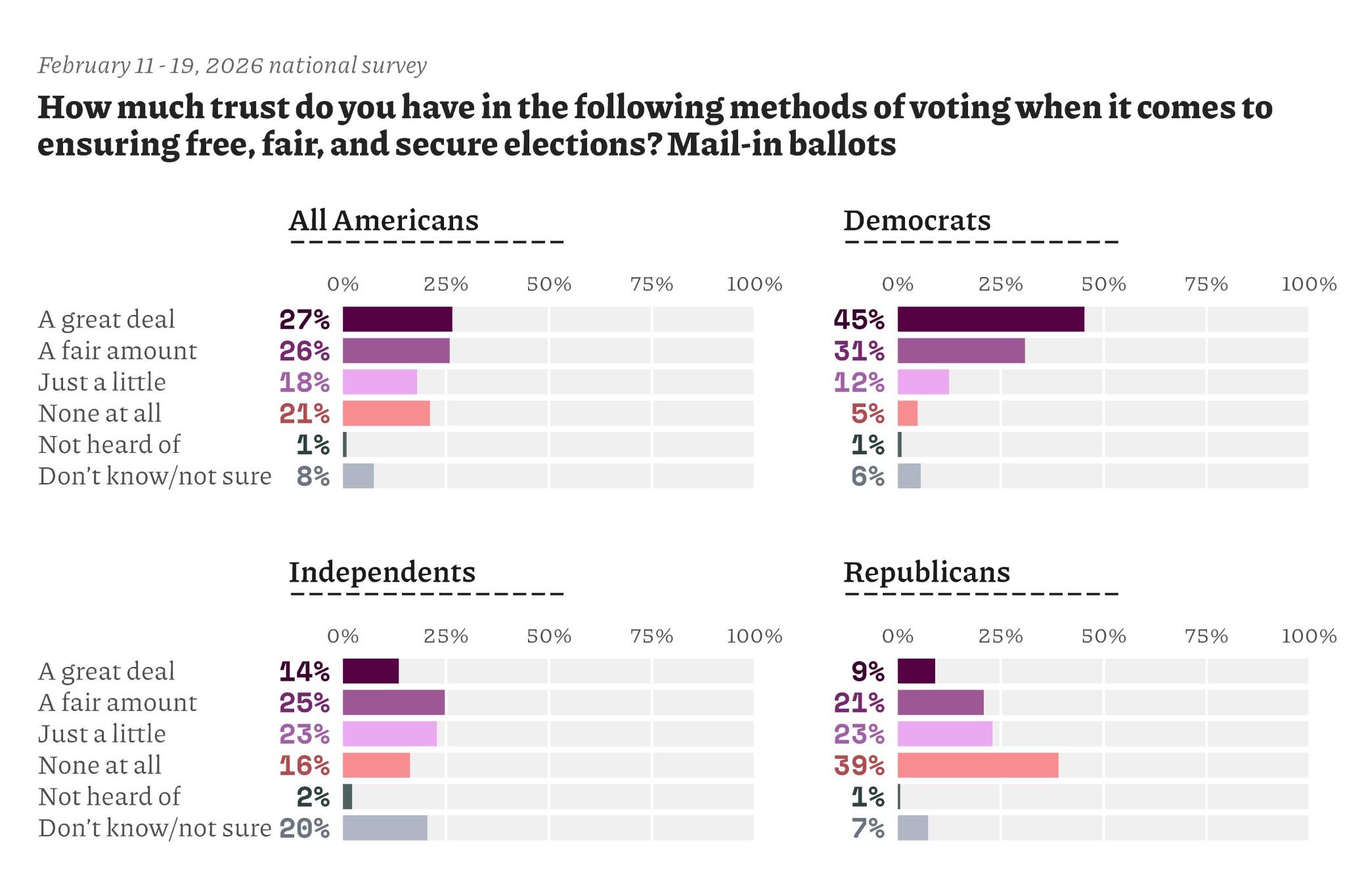
- More than 7 in 10 Americans have some level of trust for voting by mail—more than half of those surveyed have higher levels of trust.
- When Americans choose to vote by mail, state election officials ensure every eligible vote is counted.
- State leaders set rules for how and when ballots are cast, based on what works best for their constituents.
- Voters of all partisan leanings, locations, and physical abilities use mail voting as a convenient and safe method.
- In fact, the president has voted by mail in Florida and has urged his supporters to cast ballots that way, as well.
- States have tested and reliable systems in place to protect the security of the ballot as it goes from election officials to voters and back again.
- Every state has a different way of keeping mail ballots secure, including signature verification, unique bar codes on ballots, tracking procedures, and stiff criminal penalties for those who try to interfere with the mail voting process.
- Polling backs that up.
- Only U.S. citizens can legally vote in federal elections and state elections. It’s already the law of the country.
- False claims about large numbers of noncitizens voting are designed to get Americans to doubt the security of our elections.
- In America, we have multiple safeguards, including state and federal laws, to help make sure only eligible U.S. citizens can register to vote and cast ballots in federal elections.
- States and counties regularly clean their voter rolls to remove people who have moved away, have died, or are otherwise ineligible to vote.
- This executive order will not make voting safer or more secure.
- It seeks to take control of an independent federal institution, the U.S. Postal Service, to fulfill the president’s grievances.
- The executive order puts voters’ sensitive information and access to the ballot at risk.
- If the president actually cared about election security, he would make sure that the people who run our elections are protected and supported, not undermined.
- States will continue to defend their voters’ rights and privacy and uphold the law.
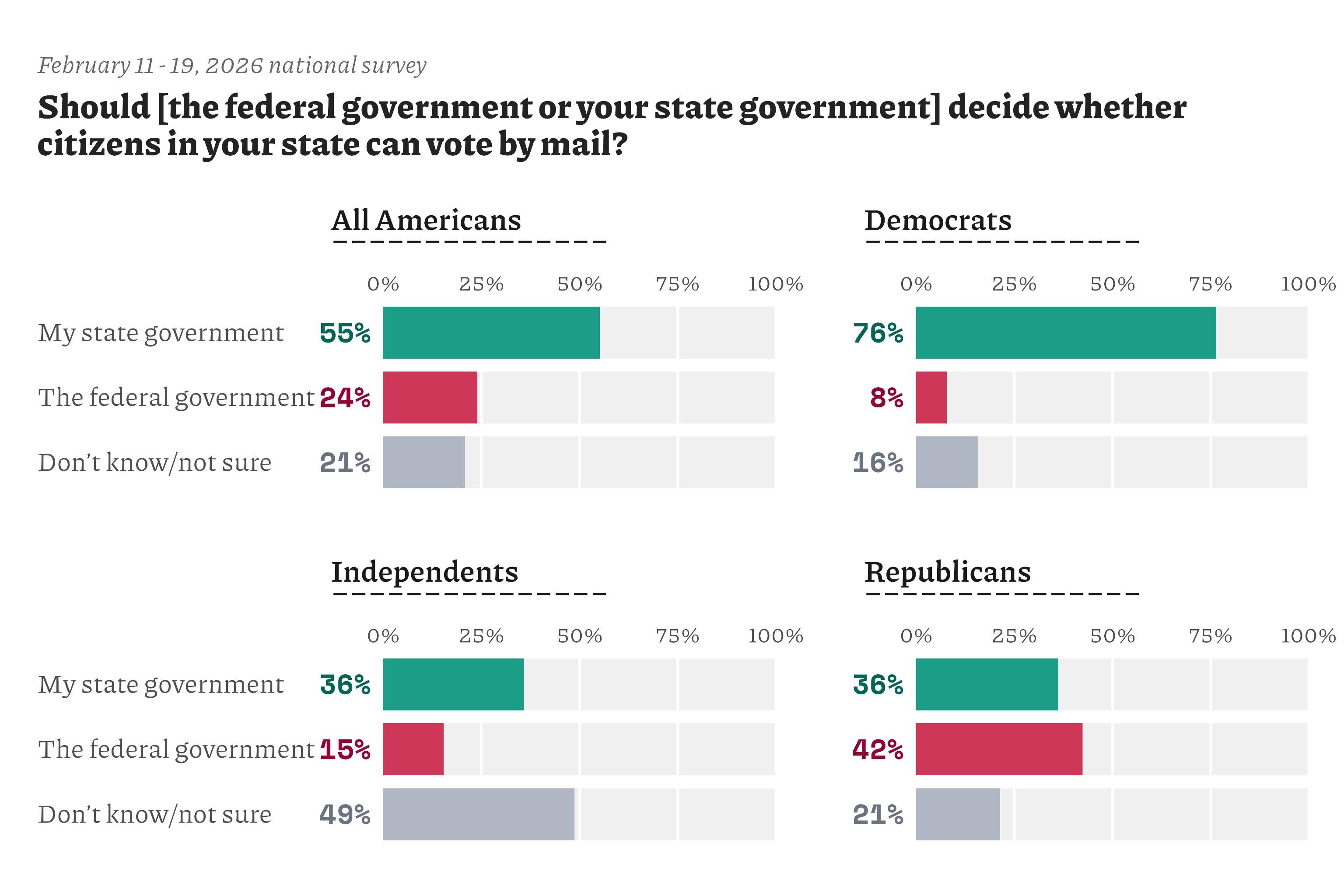
States United polling shows that a majority of Americans (53%) trust mail-in ballots to ensure free, fair, and secure elections. In addition, most Americans (55%) say their state government should decide whether citizens in their state should be able to vote by mail; Only 24% say the federal government should decide this. In the 2024 election, more than 48 million Americans voted by mail.