The Threats to the Midterm Elections
Plus: The DOJ creates a new fund to pay the president’s allies. 🗳️
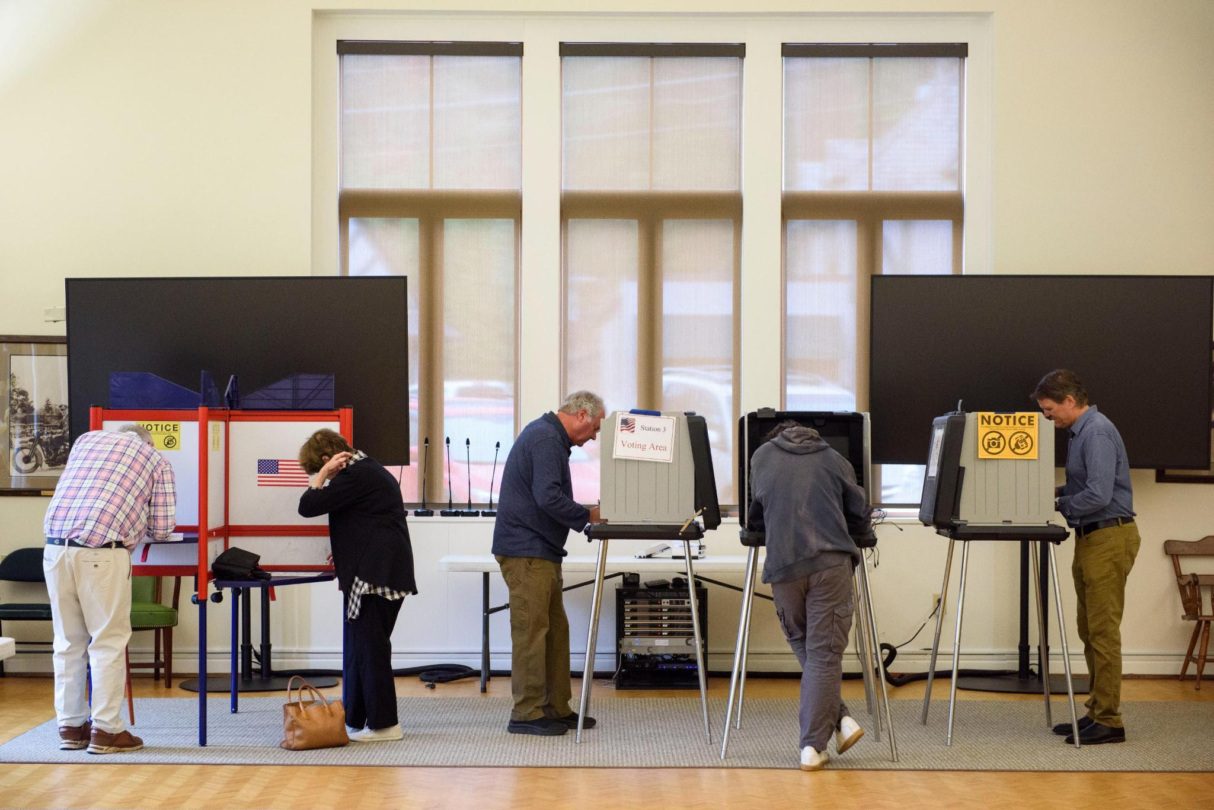
President Trump has made a political career out of spreading election lies. What began in 2016 as false campaign rhetoric about voter fraud exploded after the 2020 election, when he refused to accept defeat. Now back in power, Trump is using the force of the federal government to try to seize control over our free and fair elections.
We know the president will go to extreme lengths and push the limits of his office to keep power for himself and his allies. Authoritarian governments rarely abolish elections; they interfere with them slowly but surely so they can maintain a facade of democracy. We are watching this backsliding play out right now in the United States.
But in this country, states run elections—not the president. So, with the November midterms swiftly approaching, states are the best line of defense against the unprecedented and existential threat Trump poses to our democracy.
The Trump administration’s attack on elections has three key components:
- Control the plot: Create fertile ground for the American people to accept a federal takeover by spreading lies about the trustworthiness of our elections.
- Control the process: Use the power of the federal government to challenge the election administration process and dismantle state authority over elections.
- Control the players: Eliminate checks on your power by attacking those who stand up to you and installing anti-democracy actors in key positions.
The endgame of controlling the plot, process, and players, of course, is to grab and hold onto power. But states won’t let Trump do that without a fight. Governors, attorneys general, and secretaries of state are the antidote to the Trump administration’s efforts to undermine our elections.
You can read more about these threats and what comes next here.
This Week in Democracy
- The Department of Justice announced a new $1.8 billion fund to pay President Trump’s allies who claim they were unfairly targeted by the department under the previous administration. The fund was created as part of a settlement agreement in Trump’s $10 billion lawsuit against the Internal Revenue Service. As part of the settlement, the Justice Department also agreed to drop tax-related claims against the president and members of his family, granting them immunity from future investigations.
At a congressional hearing this week, acting U.S. Attorney General Todd Blanche refused to rule out the possibility that the Justice Department’s fund could be used to pay people convicted of assaulting police officers during the Jan. 6 attack on the U.S. Capitol. Two former U.S. Capitol Police officers who served on that day sued the Trump administration to halt the creation of the fund altogether.
- Election Deniers won primary elections for statewide offices with power over elections in Alabama, Idaho, and Pennsylvania. States United Action is tracking other candidates running for office who have denied the results of the 2020 presidential election or subsequent elections at ElectionDeniers.org.
➡️ EXPLORE: ElectionDeniers.org
- A group of local prosecutors from across the country is vowing to prosecute federal agents if they intimidate voters at the polls in November.
“A federal badge is not a license to violate the Constitution, and it is not a shield from state criminal law,” Philadelphia District Attorney Larry Krasner said in a statement. “We have prosecuted police officers who broke the law. We have prosecuted public officials who broke the law. We will prosecute ICE agents who break the law. There is no category of American who gets to operate above it.”
- Following the U.S. Supreme Court’s ruling that Louisiana’s creation of a second majority-minority congressional district was unconstitutional, the justices sent a case challenging North Dakota’s state legislative districts back to a lower court for “further consideration.” At issue is whether private individuals—as opposed to the U.S. attorney general—can bring lawsuits under the Voting Rights Act (VRA).
States United represented four former Republican governors in filing a friend-of-the-court brief in the case last year, urging the justices to uphold the rights of individuals to sue over violations of the VRA. The governors pointed out that every VRA case decided by the Supreme Court was brought by private individuals.
➡️ MORE: About the brief
State of the States
In Minnesota, local prosecutors brought charges against a U.S. Immigration and Customs Enforcement (ICE) agent accused of shooting a man during the surge of federal immigration enforcement operations in January.
The agent’s “federal badge does not make him immune from state charges for his criminal conduct in Minnesota,” Hennepin County Attorney Mary Moriarty said at a press conference.
“Nobody is above the law, including ICE agents,” Minnesota Attorney General Keith Ellison said in a statement. “The State of Minnesota must hold people accountable for violating the law and for harming Minnesotans. I support the filing of these charges, and I am working closely with Hennepin County Attorney Moriarty to ensure we reach a just outcome here.”
Moriarty’s office charged another ICE agent with felony assault last month.
New from States United
- 2026 Midterm Elections Resource Hub
States United’s resources on the threats to the 2026 midterm elections and how election officials are preparing.
- The Trump Administration’s Three-Part Attack on Mail Voting
The president’s attacks on mail voting are part of his plan to undermine trust in the voting process so he can interfere with the 2026 midterm elections.
- Sharing the Facts About Finalizing Election Results
Here are some key takeaways about how state and local officials count, finalize, and certify election results.