The Usual Suspects
Plus: The DOJ is appeals to get voter information from states. 🗳️
This Week in Democracy
- The FBI served a subpoena to America Votes, a nonprofit organization that works to increase voter participation. The subpoena comes one week after federal agents searched the offices of the Ohio Organizing Collaborative, an affiliated voting rights group.
“We are proud of our work, stand by our program and staff, and will not be deterred from carrying out our vital mission,” the Ohio group said in a statement.
Separately, California Gov. Gavin Newsom announced that the Justice Department had launched an investigation into him and his wife. Newsom is the latest of Trump’s political rivals to be targeted by the administration.
➡️ READ: How Politicized Prosecutions Undermine the Rule of Law
- The Justice Department appealed judges’ rulings in Maine and Wisconsin that dismissed its lawsuits seeking voters’ private information from the two states. Eight of the 31 lawsuits brought by the Justice Department for the information have been decided, each in favor of states and dismissing the department’s demands. The department is appealing each one.
➡️ READ: Sharing the Facts About Federal Efforts to Compile State Voter Data
- Three states held primary elections for statewide offices this week. One Election Denier won and advanced to the November general election, and three lost. States United Action is continuing to track other candidates running for office who have denied the results of the 2020 presidential election at ElectionDeniers.org.
➡️ EXPLORE: ElectionDeniers.org
State of the States
In California, the top federal prosecutor for the Los Angeles area announced that his office was investigating the primary elections held earlier this month.
The investigation comes after President Trump falsely claimed that the long vote-counting process was evidence of irregularities in the election. In fact, it’s a sign that the process is working, officials say. Local election administrators make sure every eligible vote is counted before they announce a winner.
California Attorney General Rob Bonta pushed back on the investigation and said his office would defend the state’s election process and voters’ privacy.
➡️ READ: Sharing the Facts About Finalizing Election Results
In Michigan, the state’s Bureau of Elections suspended Antrim County Clerk Victoria Bishop’s access to her county’s voter rolls after she allegedly altered or cancelled some voters’ registrations.
Bishop previously claimed that her county’s voter roll was inaccurate, and sent notices to nearly 2,000 voters that they would be deregistered if they didn’t respond and confirm their information. But in Michigan, county clerks don’t have authority over voter registration lists—that power belongs to municipal clerks, who work at the city and township level.
The Bureau of Elections warned Bishop earlier this year that her efforts to change voters’ registrations without authorization were illegal and that she could face charges if she continued.
In Wisconsin, three people facing charges for designing the “fake electors” strategy to overturn the 2020 presidential election pleaded not guilty.
Wisconsin Attorney General Josh Kaul filed the charges two years ago. President Trump issued pardons for the people involved in the 2020 plot, but presidential pardons have no effect on state charges.
Recommended Reading
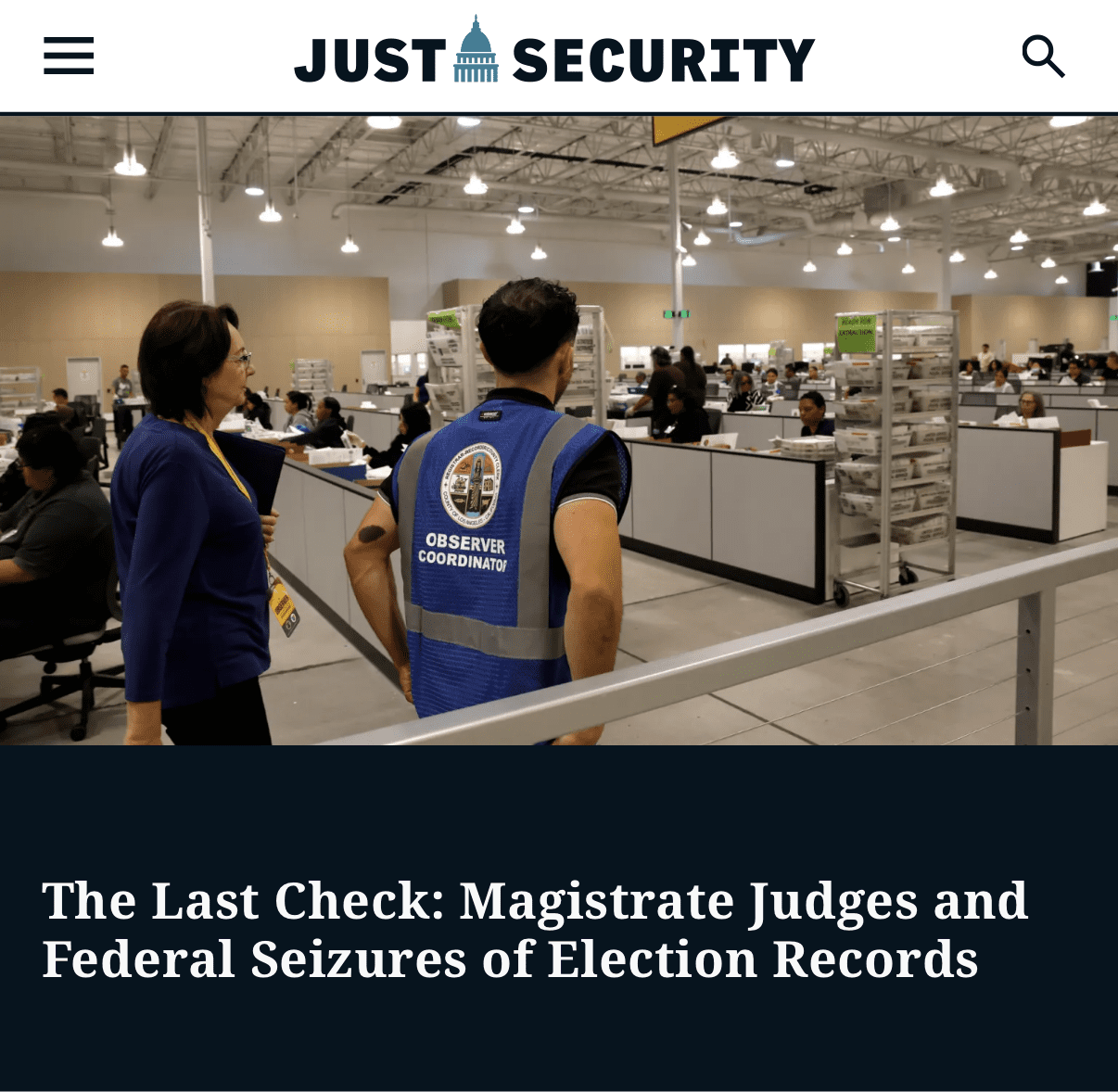
States United Senior Counsel Chelsea Rice and John Keller, a partner at Walden Haran Williams, write in a new piece for Just Security about the importance of magistrate judges’ role in election-related investigations.
Magistrate judges are officers appointed by federal district courts who have the authority to approve warrants. The Justice Department—where Rice and Keller both previously worked—turned to magistrate judges to approve its seizures of records from an elections office in Georgia and a voting rights group in Ohio.
Magistrate judges have typically been able to rely on the Justice Department to only pursue election investigations supported by evidence, and to do so in a way that it doesn’t affect an election. But under the second Trump administration, election expertise and safeguards within the department have been dismantled, allowing the administration to pursue politicized investigations.
“Judges now bear the responsibility to apply heightened scrutiny to these cases because the DOJ has dismantled the expertise that once kept election investigations in check,” the authors write.