Rejection Letter
Plus: New data from States United surveys. 🗳️
This week, a federal judge issued a resounding ‘no’ to President Trump’s illegal attempt to dictate who can vote by mail. The ruling affirms the states’ constitutional role in running elections.
Twenty-three states and the District of Columbia challenged the president’s second executive order on elections in court soon after he signed it earlier this year. Under this week’s decision, none of the major parts of the president’s order will impact the 2026 midterms in the states that filed suit. The court halted the Trump administration’s plans to build federal citizenship lists and force the U.S. Postal Service to withhold mail ballots in the upcoming midterms in those states. And it ruled that the federal government has no authority to enforce the provisions of the executive order against election officials in those states.
As States United CEO Joanna Lydgate said in a statement, “This is a huge win for states standing up to the president’s unlawful efforts to seize control of elections, and another failed power grab from President Trump. It’s a powerful reminder of the crucial role states play in checking federal power abuse, protecting elections, and defending the rights of voters.”
This Week in Democracy
- A federal judge in Massachusetts blocked the Trump administration from implementing President Trump’s executive order targeting mail voting. The judge’s order, issued in a case brought by a coalition of 24 state officials, bars the U.S. Postal Service from withholding mail ballots from some voters in those states this November.
➡️ MORE: Sharing the Facts About Trump’s Second Executive Order on Elections
In a separate case brought by state officials, another federal judge blocked the administration from enacting key portions of Trump’s first election-focused executive order. The judge sided with the states’ argument that the order was invalid because the Constitution gives states and Congress the power to run elections, not the president.
➡️ MORE: Sharing the Facts About President Trump’s Executive Order on Elections
- A federal judge in the District of Columbia blocked the Trump administration from using a faulty program to verify voters’ citizenship. The Justice Department is appealing the decision.
The program—called Systematic Alien Verification for Entitlements (SAVE)—was primarily designed to verify the citizenship status of people applying for benefits like food stamps and Medicaid, but the Trump administration repurposed it last year to check voters’ citizenship instead. Notably, the program has proven to be unreliable, flagging eligible voters as potential noncitizens and, in some cases, resulting in Americans being deregistered to vote.
➡️ MORE: About the SAVE program
- The Department of Homeland Security sent a notice to states that they could be denied federal funding if they don’t adopt the administration’s desired election policies. Among other demands, the administration wants states to use the unreliable SAVE program to verify voters’ citizenship and to only use ballots that voters mark by hand.
The administration is threatening funding used by states to prepare for natural disasters, guard against terrorism, and protect infrastructure. “Gutting Homeland Security funding to states that refuse to back down to the Trump Administration’s unconstitutional and illegal demands endangers American lives and democracy itself,” Maine Secretary of State Shenna Bellows said in a statement.
- A coalition of 23 state attorneys general filed a brief in federal court, urging a judge to investigate the settlement agreement between Trump and the IRS that created the Justice Department’s $1.8 billion fund to pay the president’s allies.
“Corruption, self-dealing, deception, and fraud, in the service of skirting constitutional limits and enriching the President, does grave damage to public trust in the rule of law and in the judicial process,” the attorneys, led by California Attorney General Rob Bonta, wrote.
State of the States
In Arizona, a state appeals court paused a lower court’s decision that transferred control of Maricopa County’s election-related IT system from the county’s Board of Supervisors to Justin Heap, the county recorder. The ruling came after a request from the board, which argued that transferring control of the system would require significant changes mere weeks before early voting begins in the state.
Former Maricopa County Recorder Helen Purcell filed a brief in the case earlier this month in support of the board’s request. Purcell—who served as the county’s chief election official for nearly 30 years—noted that making changes to the election administration process so close to the beginning of an election risks “voter confusion, administrative error, and damage to public confidence in election outcomes.”
In Michigan, a federal appeals court upheld a lower court’s decision that state officials do not have to hand over voters’ private data to the Trump administration.
Judges have decided eight of the 31 lawsuits brought against states by the Justice Department for voters’ information, each dismissing the department’s demands. The Michigan case is the first one to be decided at the appellate level.
➡️ MORE: Sharing the Facts About Federal Efforts to Compile State Voter Data
In Minnesota, a federal judge threw out subpoenas that the Justice Department issued against Gov. Tim Walz, Attorney General Keith Ellison, and local officials regarding their opposition to the surge of federal immigration enforcement in the state this past winter.
The subpoenas “were a part of a broader campaign to coerce state and local officials in Minnesota to assist the Trump administration in its enforcement of immigration laws,” the judge wrote in his decision. “And, of course, this campaign played out against the backdrop of the Trump administration’s well-established history of using criminal investigations to retaliate against and pressure the President’s political and personal adversaries.”
Following the judge’s ruling, Walz filed Freedom of Information Act requests with federal agencies seeking to uncover a coordinated effort to target Minnesota within the Trump administration.
➡️ READ: How Politicized Prosecutions Undermine the Rule of Law
In New Jersey, a federal judge dismissed the Trump administration’s lawsuit against four cities over their immigration policies.
The Justice Department sued Newark, Jersey City, Paterson, and Hoboken last year, arguing that the cities’ policies limiting how local law enforcement can work with federal immigration enforcement agencies violated the Constitution. But the judge ruled this week that the department had no grounds on which to sue the cities, since New Jersey has similar statewide policies.
Gov. Mikie Sherrill signed the statewide policy into law in March. “We’ve watched poorly trained, masked [U.S. Immigration and Customs Enforcement] agents put communities across the country in danger,” Sherrill said at a bill signing ceremony. “In this state we have drawn a line—no, not here.”
➡️ MORE: Survey: Americans Disapprove of Federal Agents’ Enforcement Tactics
New from States United
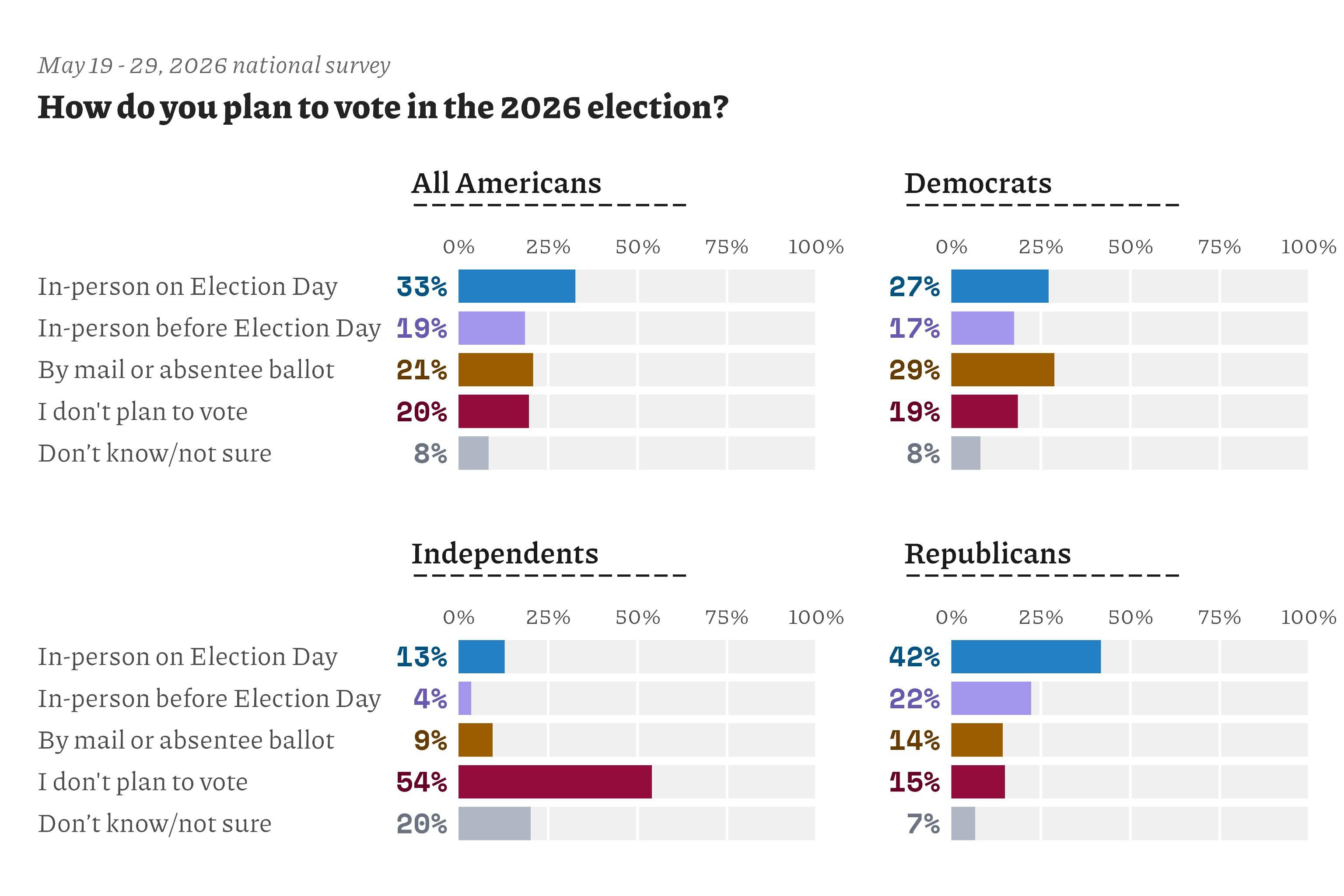
New survey data from States United shows that about one in five Americans plan to vote by mail in this year’s midterm elections, and that most express either a great deal or a fair amount of trust in mail voting.