President Trump’s Unconstitutional Attacks on Free and Fair Elections
How states are challenging Trump’s efforts to expand control over elections
In This Resource
In his second term, President Trump has tried to claim more authority over elections than any president before him. His administration has sued two dozen states to seize sensitive voter information; it has investigated local election offices based on discredited lies about the 2020 election; and it has sent thousands of masked and heavily armed federal agents into America’s streets, sparking fears over federal interference during the 2026 midterm elections.
The administration’s attempts to coerce and intimidate states must not be seen in isolation. From attempting to deploy National Guard troops over governors’ objections, to trying to cut billions in federal funds for states without congressional approval, the president’s actions have far exceeded federal law and crumbled the trusted partnerships between states and the federal government.
But pro-democracy states have not cowered. With the support of organizations like States United, state leaders all over the country are pushing back strategically and effectively on this unparalleled attack on constitutional principles. They are meeting the moment by standing up, speaking out, and taking the Trump administration to court and winning. Governors, attorneys general, and secretaries of state are leading the fight for democracy.
Here are the unprecedented, existential threats that states must confront this election year as this administration wages attacks on America’s voting process, the rule of law, and the U.S. Constitution.
Threats to free and fair elections are not new in this country. In recent years, anti-democratic actors who have promoted false information about the accuracy and security of our election system have attempted to limit the ability of Americans to register to vote; lead mass challenges to state voter rolls; seek widescale purges of those lists; curtail the ways in which voters can cast a ballot, including early and by mail; and change the time-tested and proven ways local election officials count ballots.
However, until now, those people have not had a champion in a place with the immense power of the presidency. That changed last January, when Trump was sworn in again.
In addition to endlessly repeating false claims about the 2020 presidential election results, Trump has widely circulated the baseless theory that noncitizens are voting illegally on a large scale. He is consistently sowing doubt in state-run elections, perhaps to depress turnout in the midterms, or perhaps to have a justification to try and seize control from the states.
We know that when Americans trust elections, they are more likely to vote. That’s why it’s so important that pro-democracy state leaders push back against Trump’s multipronged effort to snatch power over elections. Their litigation and leadership have never been more critical.
 Melissa Sue Gerrits/Getty Images
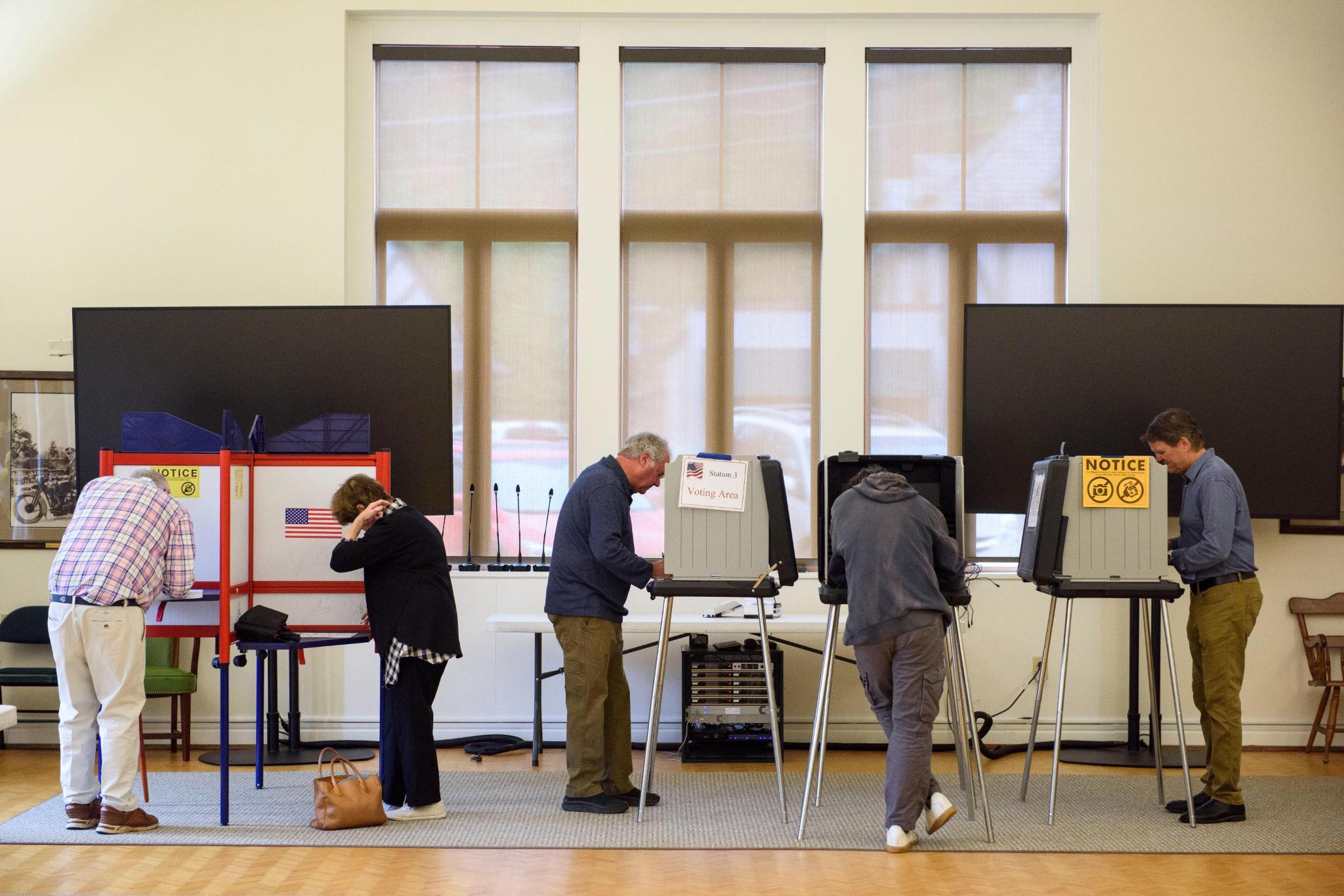
On March 25, 2025, Trump signed an executive order that tried to radically change processes around registering to vote and casting a ballot. The order, in part, directs an independent federal agency, the Election Assistance Commission, to impose new voter registration rules for every state.
Attorneys general from 21 states challenged key sections of the executive order in court. They argued that the law and the Constitution do not allow the president to make unilateral decisions about elections. The attempted overreach of Trump’s executive order poses a threat to our decentralized, nonpartisan system of fair election administration.
So far, judges have sided with the states, blocking the administration from imposing new citizenship documentation requirements to register to vote and more.
The American system authorizes states to administer elections fit for their communities, in line with the core democratic principles that protect voters and ensure elections are free, fair, and accessible for all. In 2026, state and local election officials will continue to ensure that voting and counting processes are secure and accurate, and that voters have their say.
 Stephen Maturen/Getty Images
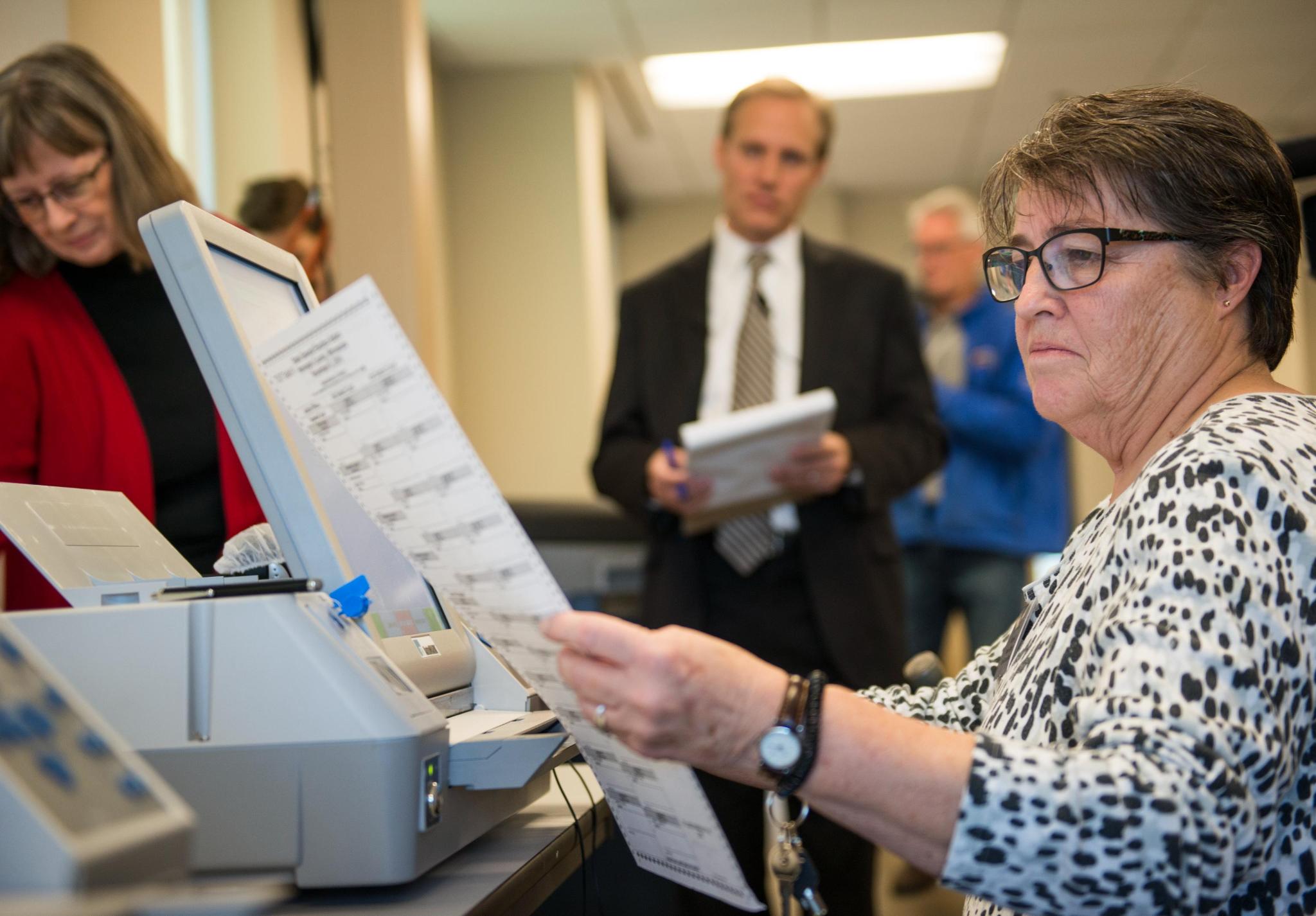
In America’s decentralized voting system, states have long managed their voter registration lists, ensuring their rolls remain accurate through frequent maintenance. But in an unprecedented move, the Trump administration has attempted to get ahold of state voter rolls.
U.S. Department of Justice officials have demanded that states turn over sensitive voter information, including partial Social Security and driver’s license numbers. Federal officials have claimed that they want to prove that only eligible voters are on voter rolls. Pro-democracy states, seeing that these demands would violate state and federal laws, have refused to hand over that information. They swore to protect that data and have refused to give in to the Justice Department’s demands.
In response, the Trump administration has sued more than 20 states and the District of Columbia for that sensitive data. But states have fought back in court—and won. Courts agreed that the Justice Department’s demands violate election and privacy laws.
The sweeping demands from the Justice Department are not normal oversight. The federal government is using its immense power to force states to participate in the president’s targeting of individual American voters.
States have a long track record of ensuring that every eligible vote—and only every eligible vote—is counted. As much as the president wants to say that noncitizens, dead people, and voters who moved out of state are voting in large numbers, the facts don’t match his claims. States will continue to defend the laws that govern who can vote and how.
 Robert Gauthier/Los Angeles Times via Getty Images
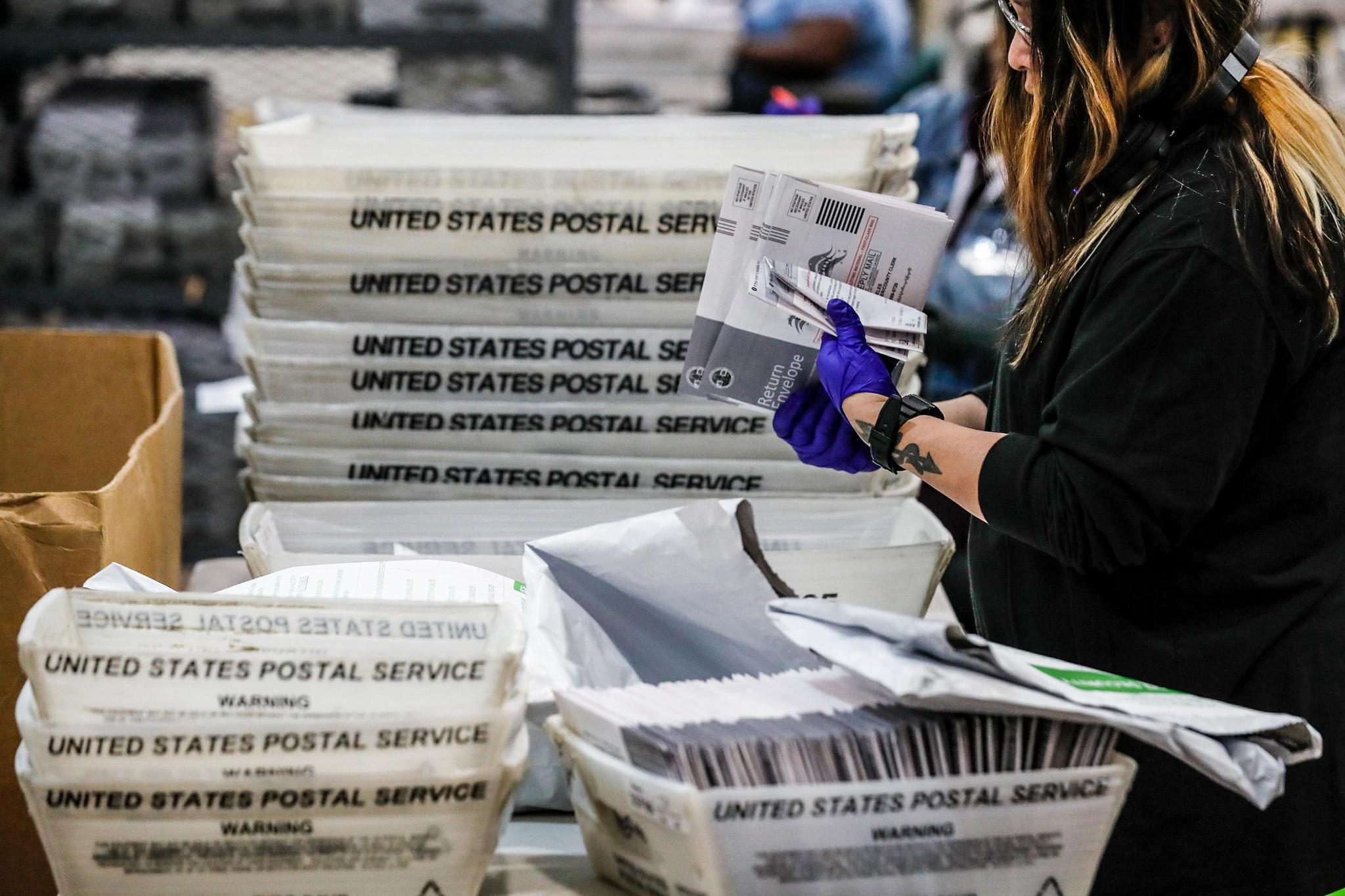
Trump lost the 2020 presidential election. States conducted recounts and audits to prove that fact. And state and federal judges affirmed that in court. The count was accurate: there was no widespread wrongdoing. But the for the past five years, the president has continued to repeat the lie that he won.
Now that he’s in office, he has directed federal officials to investigate the 2020 election. He even sent the FBI to Fulton County, Georgia, in January 2026 to seize hundreds of boxes of old election materials, including ballot images and voter rolls from 2020, to try to find an ounce of evidence to support these long-discredited conspiracy theories.
That evidence simply doesn’t exist. After the 2020 election, when Trump asked Georgia Secretary of State Brad Raffensperger to “find” the votes needed for him to win the state, Raffensperger laid it out: “Mr. President, the challenge that you have is the data you have is wrong.”
State and local election officials should be able to concentrate on the upcoming midterm elections, instead of having to defend an election from five years ago that was proven accurate time and time again. States and their allies will continue to refute Trump’s election lies.
 Alex Wong/Getty Images
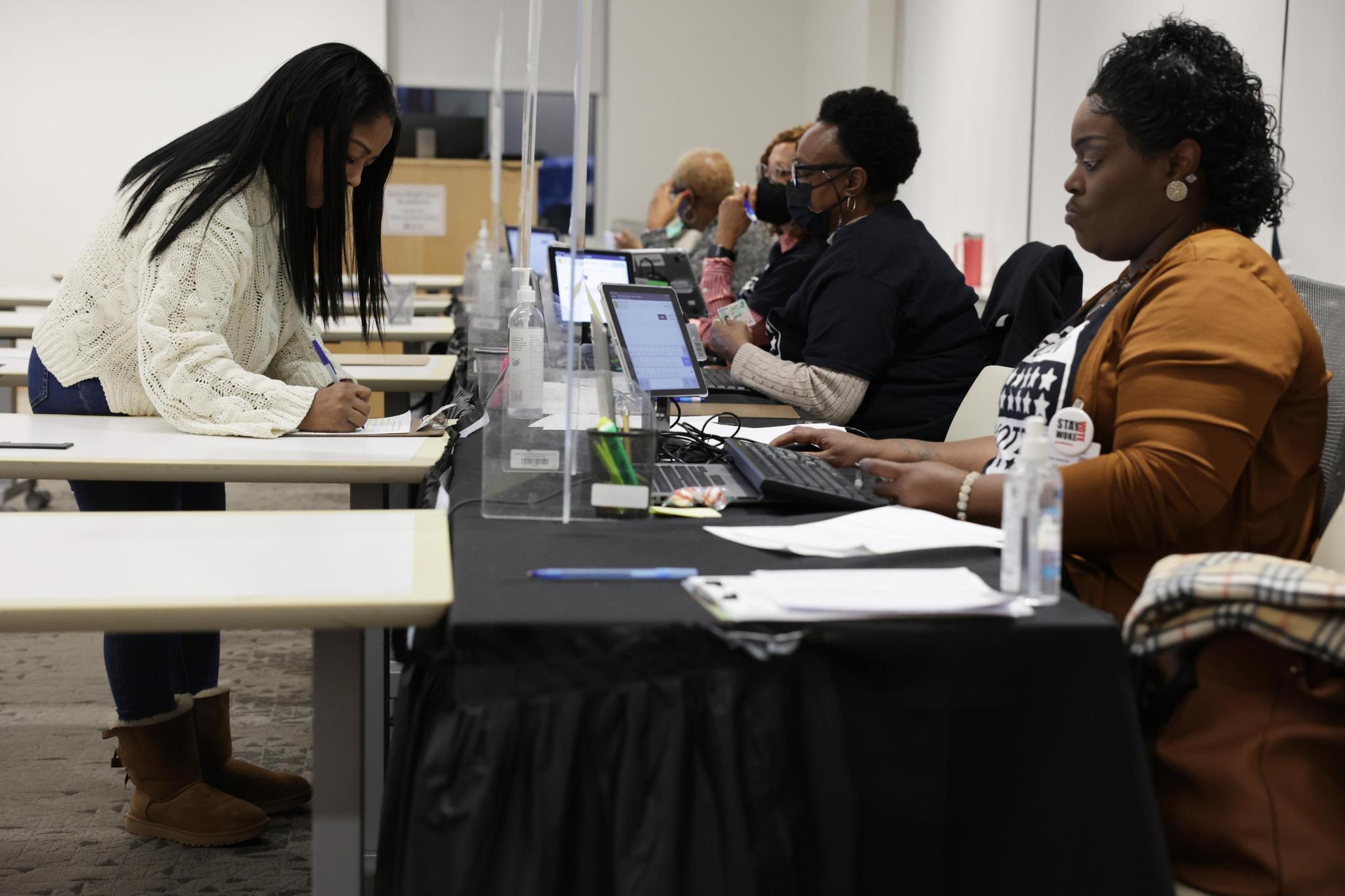
Adding to these threats to state-run elections, Trump has waged dangerous attacks on states’ ability to govern and support their residents. The president is trying to militarize American streets, withhold crucial federal funding for state programs that help their residents, and pursue baseless investigations—draining state resources and attempting to intimidate state officials.
But once again, states are winning in court. Federal judges have continued to reaffirm the constitutional limits of the presidency. Trump cannot act alone. He must follow the law.
Still, his defiance of constitutional powers may be heading to another showdown this November.
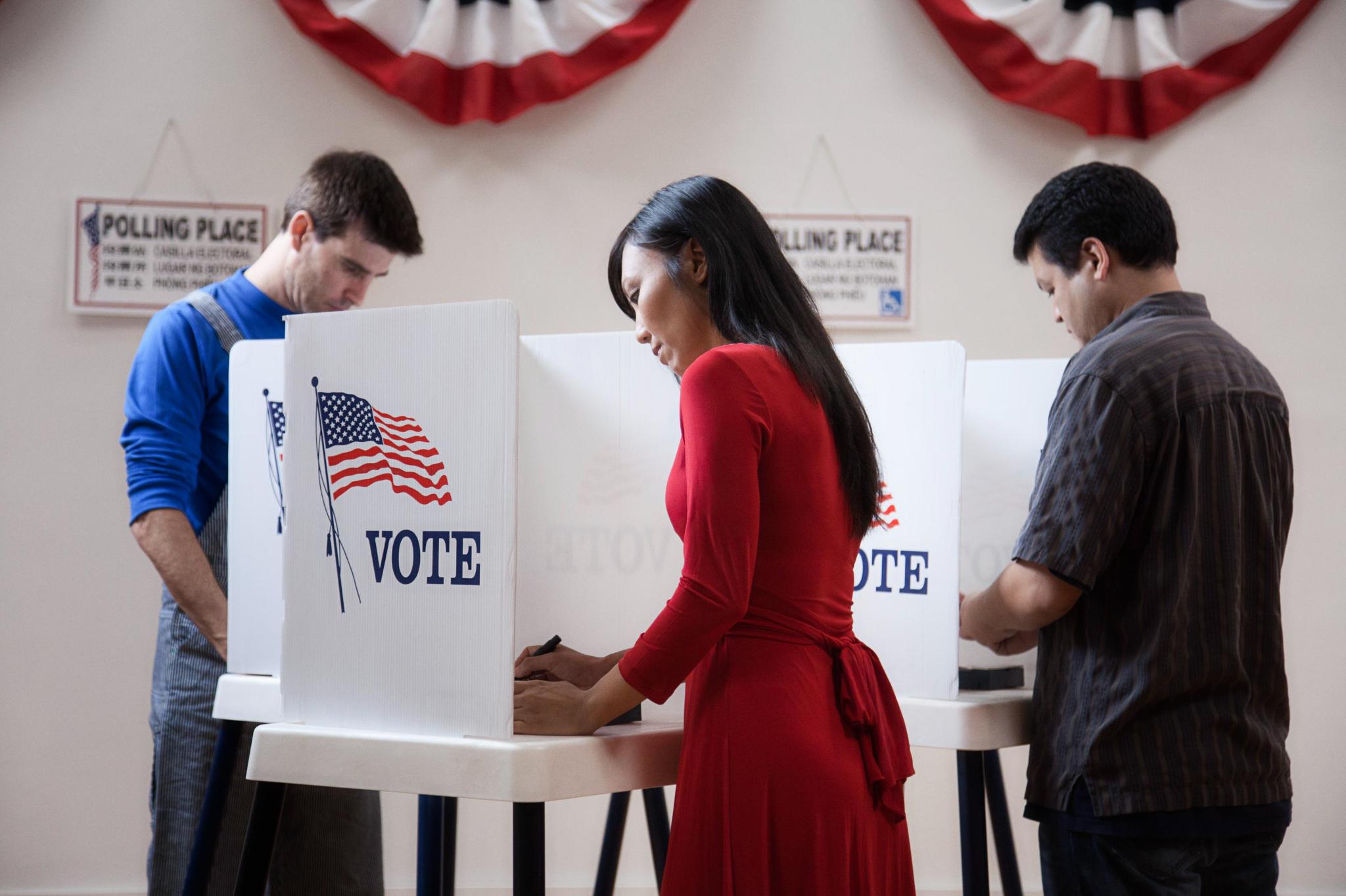
In 2026, states face an unprecedented challenge. The breadth of the threat to the election process is extreme; the president is clearly trying to interfere with how people vote and how states run elections, and he is trying to set up a path to challenge election results in the future. And in the process, he’s showing his indifference to the rule of law.
States United will continue to work hand in glove with pro-democracy state leaders to provide them with the communications, legal, and research guidance they need to face this existential threat to the rule of law, the voting process, and the Constitution.