How Politicized Prosecutions Undermine the Rule of Law
The U.S. Department of Justice is the American people’s law firm. Traditionally independent from the political motivations of any given administration, the Justice Department is supposed to defend the rule of law without prejudice and protect the rights of all Americans. It is not the president’s personal law firm and should not be used for politicized prosecutions.
But since starting his second term in office, President Trump has aimed his animus at political opponents through the Justice Department by threatening arrests, ordering unwarranted investigations and prosecutions, and jeopardizing military retirements. Under his direction, the Justice Department has been used as a tool for political revenge to target state and federal officials who have spoken out or taken actions against him.
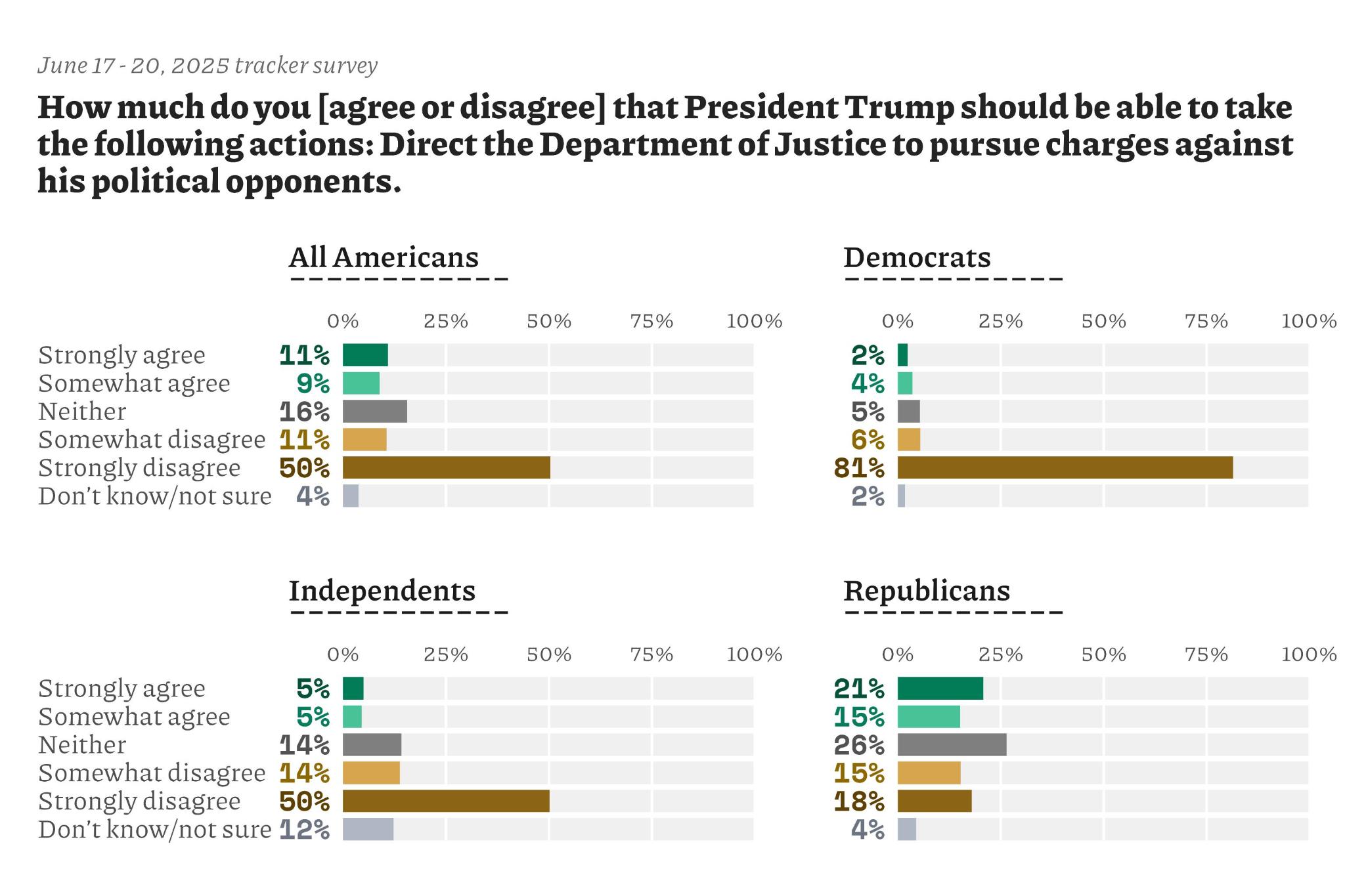
This tactic has only increased over the past year. The abuse of federal law enforcement authority undermines Americans’ trust in the Justice Department’s independence and legitimacy. Indeed, States United polling shows Americans don’t want this level of politics at the Justice Department.
Democracies only function when leaders apply the laws of their country fairly and without bias. When federal law enforcement wades into politics and the president exploits his influence to punish those who stand in his way, it hurts all Americans.
 Photo by Kevin Dietsch/Getty Images
Trump has directed the Justice Department to use its immense law enforcement power to target his political opponents since his first days back in office. He has pressured Attorney General Pam Bondi on social media to bring charges against specific individuals, and his own top aide recently acknowledged that the president has engaged in “score settling” and “retribution.”
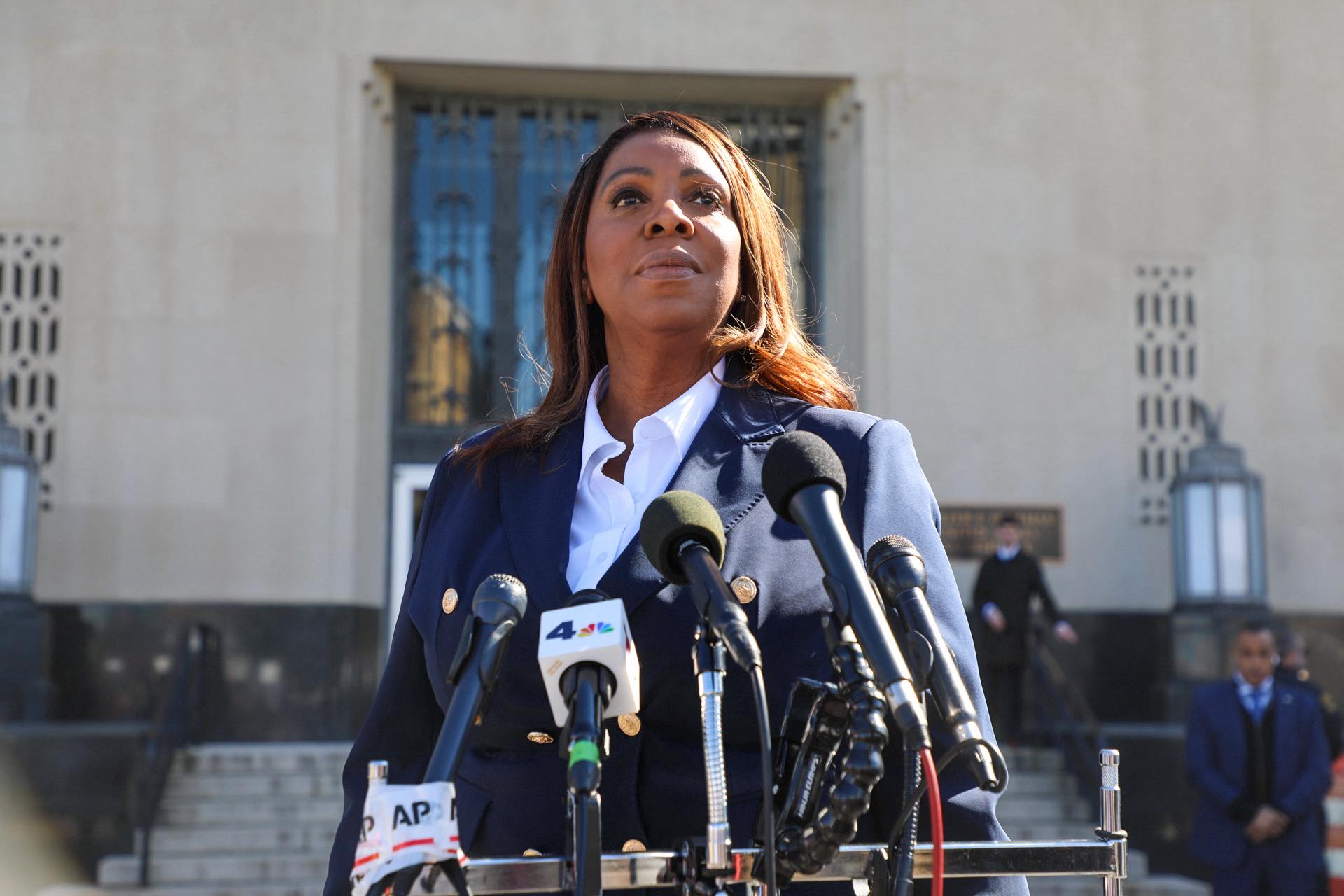
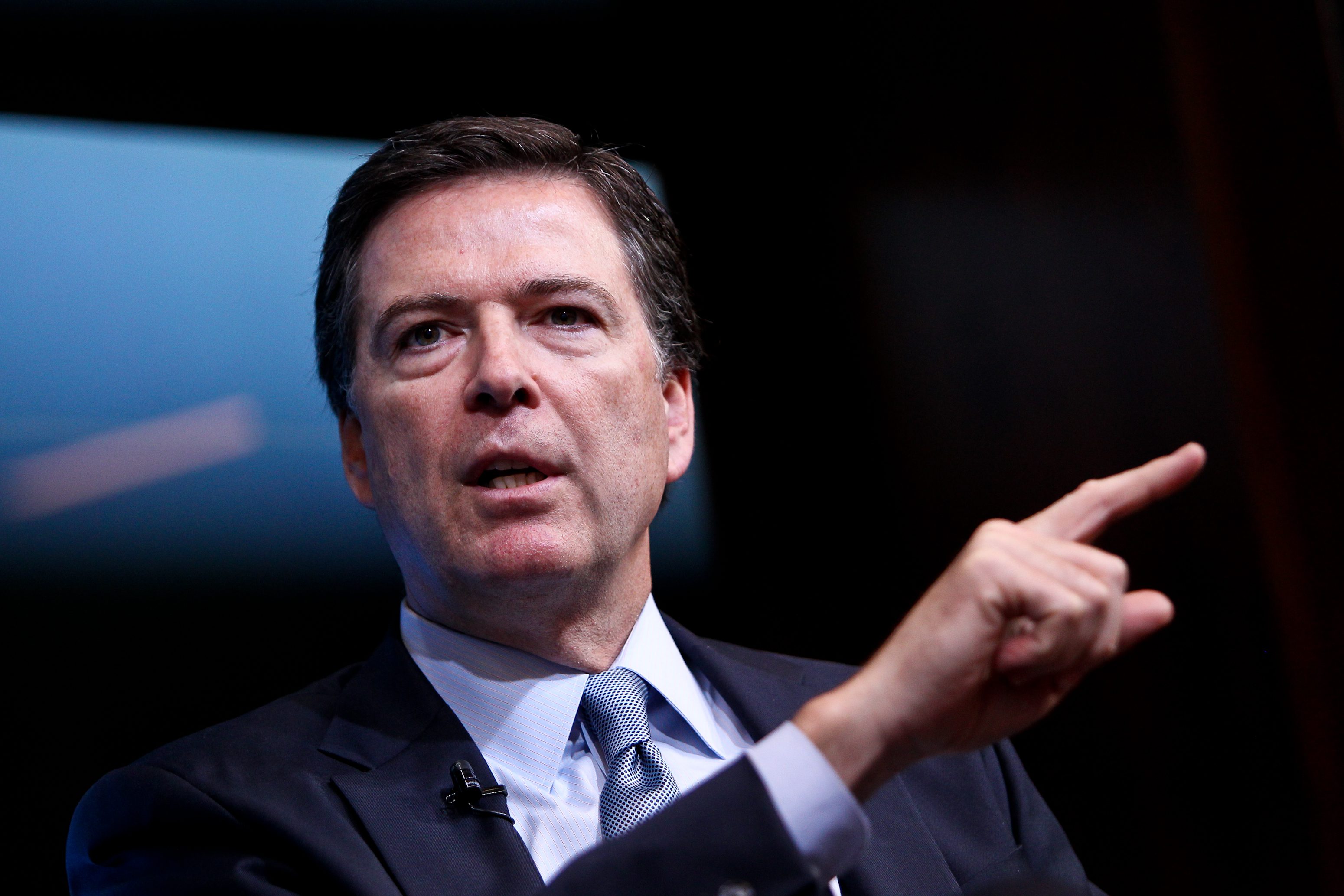
Last fall, a Trump-appointed lawyer carried out the president’s orders by investigating and charging former FBI Director James Comey and New York Attorney General Letitia James.
The president has targeted both officials for years. When Comey was FBI director, he launched the investigation into the 2016 Trump campaign’s ties to Russian intelligence operatives. As New York attorney general, James brought a successful state civil fraud case against Trump and others at the Trump Organization.
Once he regained the presidency, Trump went after Comey and James through the legal system. Under Trump’s orders, the Department of Justice accused Comey of obstructing congressional proceedings by allegedly lying to Congress during a 2020 hearing; DOJ also accused James of mortgage fraud. Career prosecutors did not want to bring those charges, finding they lacked evidence. But they were overruled by the president’s political appointee, Lindsey Halligan, Trump’s former personal lawyer who came to the role with no prior criminal law experience.
Both Comey and James pleaded not guilty and filed motions to dismiss their cases, on grounds that the charges were vindictive and that the person who brought the charges was illegally appointed to her position by the Trump administration. Judges later dismissed both cases on the latter ground.
 New York State Attorney General / Facebook
These politically motivated investigations join several others brought recently by the Justice Department, including against U.S. Sen. Adam Schiff of California, who helped lead a congressional investigation of the Jan. 6, 2021, attack on the U.S. Capitol; Jerome Powell and Lisa Cook, Federal Reserve leaders who have refused Trump’s calls to quickly lower interest rates; and Minnesota Gov. Tim Walz, who has opposed increased federal immigration operations in his state.
Additionally, federal law enforcement officials are investigating Fani Willis, the district attorney in Atlanta who charged Trump with attempting to interfere in the 2020 presidential election after he pressured state officials in Georgia to overturn his loss.
The president has indicated he intends to direct the Justice Department to continue with these types of investigations against his perceived enemies.
In November, a federal judge dismissed the department’s cases against Comey and James. The judge found that Halligan was unlawfully appointed as interim U.S. attorney of the Eastern District of Virginia. The Justice Department attempted to re-indict James but twice failed to convince a grand jury. (Halligan recently left her post under continued pressure from federal courts.)
Despite these setbacks, Trump’s efforts to misuse the Justice Department continue. According to reports, the Department is considering new indictments against Comey and James, building on the president’s long history of targeting each official.
Going after individuals simply because they have opposed those currently in power is not just an abuse of power; it goes against our shared constitutional principles. Federal law enforcement must remain politically neutral.
 Brookings Institution
State officials and legal scholars agree.
In October, more than 20 state attorneys general issued a joint statement condemning the retaliatory prosecution of James.
“None of us, whether our states’ top legal officials or members of the public, should stand idly by while justice is upended and this president uses the criminal legal system to pursue his personal vendettas,” they wrote.
California Attorney General Rob Bonta similarly excoriated the charges against Comey, calling it disturbing, shameful, and a disgrace.
“Prosecutors have a responsibility to bring charges based on facts and the law—not for political retribution,” he added.
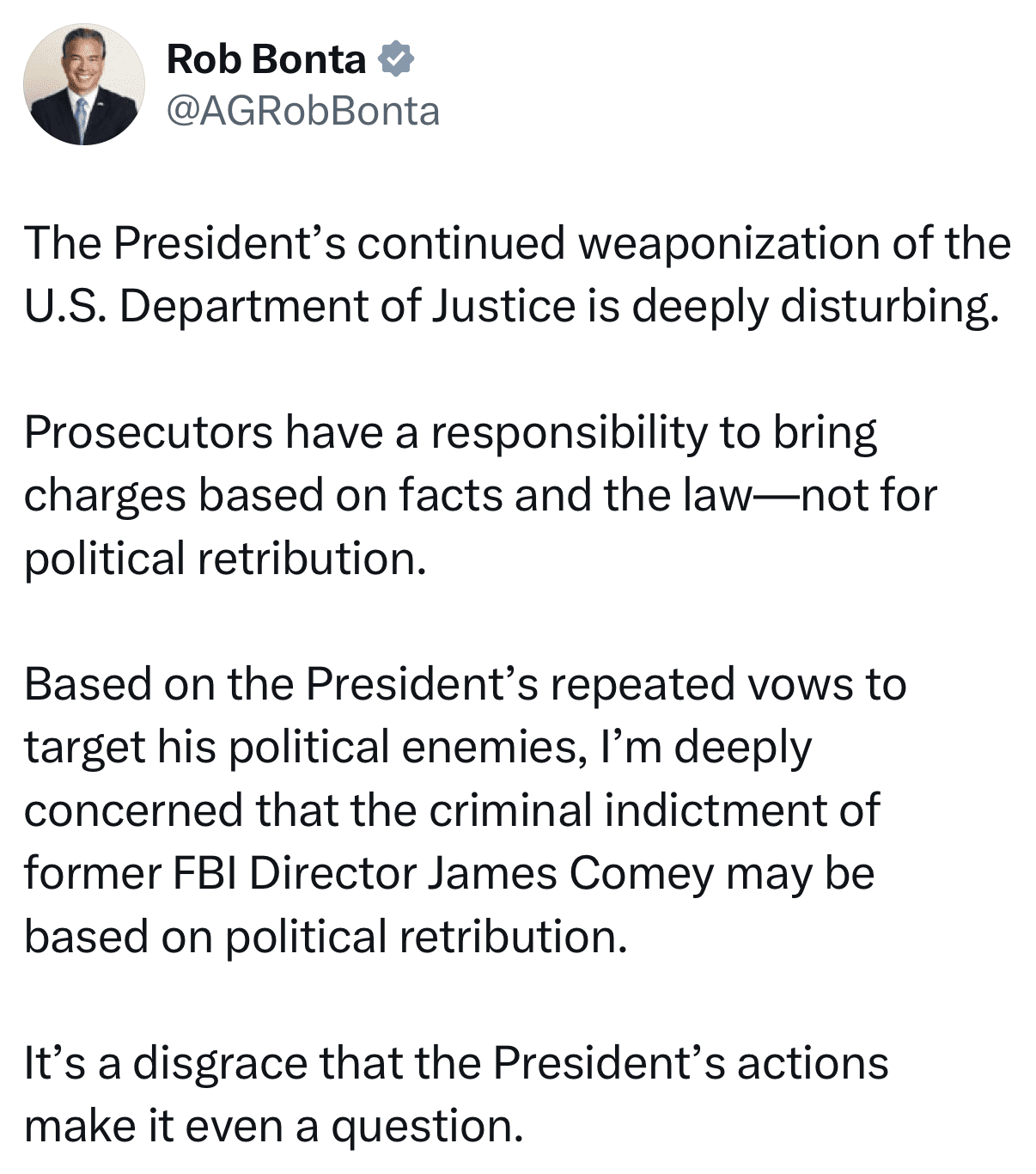 @AGRobBonta / X
In the fall, States United convened ideologically diverse groups of leading democracy scholars and experts to support Comey and James by filing amicus briefs in their respective cases, arguing they were politically motivated and threatened the rule of law.
In their briefs, the groups argue that dismissing the cases is necessary to protect the integrity of the judicial system. They point out that politically motivated prosecutions are a common symptom of weakening democracies around the world.
“We see a concerning trend of such prosecutions, and the threat of additional ones, in the first nine months of President Trump’s second administration,” they wrote in the brief supporting James.
When a country’s institutions, including within the legal system, lose independence, leaders consolidate power to stifle dissent and exact retribution from political opposition, the group argued.
The U.S. is guided by the principle that everyone is equal under law. When law enforcement is used to protect friends and punish enemies, it undermines that principle. The American people back that up.
Polling from States United shows that 6 in 10 Americans don’t approve of the president directing the Justice Department to pursue charges against his political opponents.
Only 1 in 5 Americans agree that the president should be able to use the Justice Department for political ends—the idea failing to get majority support across Democrats, independents, and Republicans.
The Justice Department is supposed to apply laws equally to all individuals, regardless of political power or party. Institutional independence, including within prosecutors’ offices, helps ensure legal decisions are based on facts and law, not political considerations. The Justice Department under this administration has ignored that tradition and put the rule of law at risk.