Prosecution Politics
Plus: A new friend-of-the-court brief from States United. 🗳️
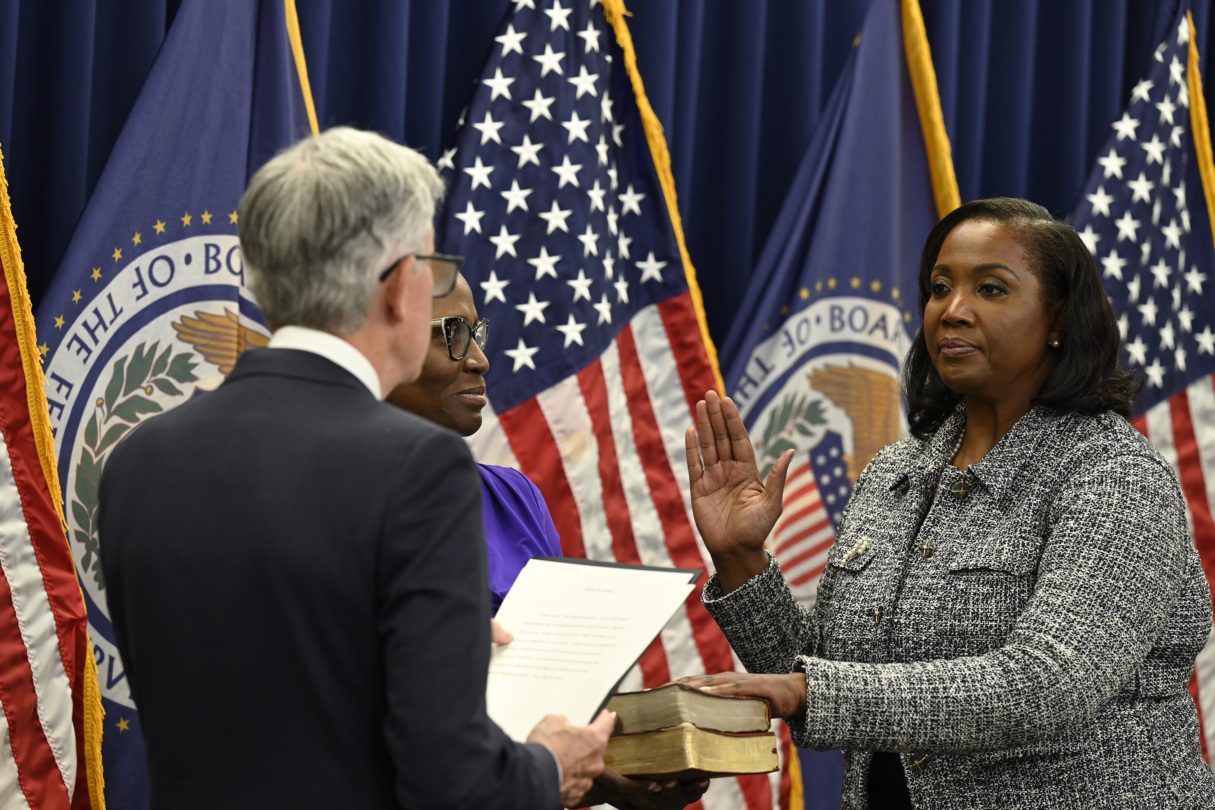
The U.S. Supreme Court this week heard arguments in a case brought by Lisa Cook, one of the Federal Reserve’s governors who has refused Trump’s calls to quickly lower interest rates. The president tried to fire Cook in August, but she sued to block him from doing so.
Trump justified his attempt to fire Cook by citing unproven allegations of mortgage fraud—the same charges that federal prosecutors twice failed to bring against New York Attorney General Letitia James.
A defining feature of the first year of Trump’s second term, which passed on Tuesday, has been the use of the Justice Department to bring charges against the president’s political enemies.
In some cases, prosecutions have been used as an intimidation tactic to achieve the president’s other goals, like in Cook’s case. In other situations, the charges are simply retribution: James indicted Trump in a state fraud case, so prosecutors brought charges against her. (The latest reports indicate that after failing to bring mortgage fraud charges, prosecutors are investigating James’ transactions with her hairdresser.)
So far, this is a losing strategy. Charges against James were dismissed because Attorney General Pam Bondi unlawfully appointed a new prosecutor who agreed to pursue the charges. In Cook’s case, reports indicate that the Supreme Court seems inclined to deny Trump the power to fire her immediately.
By standing up to the administration’s pressure, the president’s targets are showing that the rule of law still matters, and that it can prevail.
This Week in Democracy
- The Justice Department sent subpoenas to Minnesota Gov. Tim Walz, Minneapolis Mayor Jacob Frey, and other state officials as part of a federal investigation into allegations that state officials conspired to impede federal law enforcement. Frey called the investigation “an obvious attempt to intimidate me for standing up for Minneapolis, our local law enforcement and our residents against the chaos and danger this administration has brought to our streets.”
Walz mobilized the Minnesota National Guard to help local law enforcement respond to protests against federal immigration enforcement. The Trump administration also ordered Army units to be prepared to deploy to Minneapolis if necessary.
Whistleblowers in the federal government filed a complaint alleging that U.S. Immigration and Customs Enforcement instructed its agents to enter people’s homes and make arrests without judicial warrants. The whistleblowers asked Congress to investigate.
- More than 40 former military leaders—including former secretaries of the U.S. Army and Navy, retired senior officers, and Vet Voice Foundation, represented by States United and Protect Democracy—filed a brief supporting U.S. Sen. Mark Kelly’s case against Defense Secretary Pete Hegseth. The group argues that the punitive measures taken against Kelly, if allowed to stand, “would chill public participation by veterans around the country.”
The measures stem from a video that Kelly, a retired Navy captain, and other veterans serving in Congress published on social media, in which they urged members of the military and intelligence community to refuse to comply with illegal orders.
➡️ READ: More about the brief
- Lindsey Halligan left the U.S. attorney’s office in Virginia after a federal judge rebuffed her attempt to stay. A different judge ruled in November that Halligan was unlawfully appointed to her position by U.S. Attorney General Pam Bondi, but Halligan continued to refer to herself in court filings as the office’s top federal prosecutor. Earlier this month, the judge warned Halligan that she could face disciplinary measures if she continued to do so.
A federal judge also ruled last week that Ryan Ellison, the acting U.S. attorney for New Mexico, was also unlawfully appointed by Bondi. Ellison is the latest Bondi appointee to be ruled against: In recent months, judges have disqualified federal prosecutors in California, Nevada, New Jersey, and New York.
- The White House’s Office of Management and Budget ordered federal agencies to review federal funding for more than a dozen states, each of which voted against Trump in the 2024 presidential election.
➡️ READ: Sharing the Facts About Unlawful Attempts to Freeze Federal Funds
State of the States
In Maine, federal agents began conducting immigration enforcement operations like those seen in cities across the country.
Gov. Janet Mills said last week that she directed state police and local law enforcement to coordinate with the U.S. Department of Homeland Security to prepare for any operations. “If they come here, I want any federal agents—and the president of the United States—to know what this state stands for,” she said in a statement. “We stand for the rule of law. We oppose violence. We stand for peaceful protest. We stand for compassion, for integrity and justice.”
But this week, Mills told reporters that federal officials did not respond. “Why Maine? Why now? What were the orders that came from above? Who’s giving the orders? We’ve reached out. We’ve asked questions. We have no answers,” she told reporters.
➡️ READ: What’s Breaking Through About Federal Law Enforcement Tactics
In Virginia, the U.S. Department of Justice sued Susan Beals, the state’s chief election official, seeking to force her to provide a list of the state’s registered voters. Federal prosecutors are demanding that the list include voters’ personal information, including their addresses, Social Security numbers, and more.
Virginia is the latest state to be targeted by the Justice Department. 23 other states and Washington, D.C., have also been sued for similar information in recent months, according to the Brennan Center for Justice.
Last week, the federal judge overseeing the case against California dismissed the Justice Department’s lawsuit, and the judge overseeing the case against Oregon said he was planning to do the same.
➡️ READ: Sharing the Facts About Federal Efforts to Compile State Voter Data