Poll Vault
Plus: Pushback on the DOJ’s political prosecutions. 🗳️
This Week in Democracy
- A federal appeals court rejected the Trump administration’s request to pause a lower court’s ruling that blocked federal officials from implementing key parts of President Trump’s second election-focused executive order. After the appeals court denied its request, the administration asked the U.S. Supreme Court to pause the lower court ruling.
Among other things, the president’s executive order would put restrictions on which voters the U.S. Postal Service could deliver mail ballots to. Officials from 23 states and the District of Columbia brought the case. The lower court’s order blocked the administration from withholding ballots in the midterm elections in any of the states that sued.
➡️ MORE: Sharing the Facts About Trump’s Second Executive Order on Elections
- Former FBI Director James Comey asked a federal judge to dismiss the second indictment against him, arguing that the charges are based on the president’s personal animus toward him. The Justice Department brought the second round of charges against Comey in April over an image he posted on social media containing the message “86 47.”
In the court filing, Comey’s lawyers accused the Justice Department of ordering “illegal electronic surveillance” of the former FBI director without a warrant.
The Justice Department first brought charges against Comey in September, but a judge dismissed the case after finding that the federal prosecutor leading it was unlawfully appointed to her role. States United filed a friend-of-the-court brief in that case, arguing that the politically motivated prosecution of Comey represented a threat to the rule of law.
➡️ READ: How Politicized Prosecutions Undermine the Rule of Law
- Trump imposed new tariffs on dozens of countries, effectively restoring many of the levies that were struck down by the U.S. Supreme Court earlier this year. A group of small businesses sued the administration over the latest tariffs shortly after they were put into effect.
The U.S. Supreme Court ruled earlier this year that the president used a flawed legal justification for his first round of global tariffs. In response, the president imposed a temporary 10% tariff under a different law which expired last week. The latest round of wide-ranging tariffs use an additional legal justification, but some experts say they are also likely to be struck down in court.
➡️ MORE: Americans Widely Believe Tariffs Will Drive Up Costs
New From States United
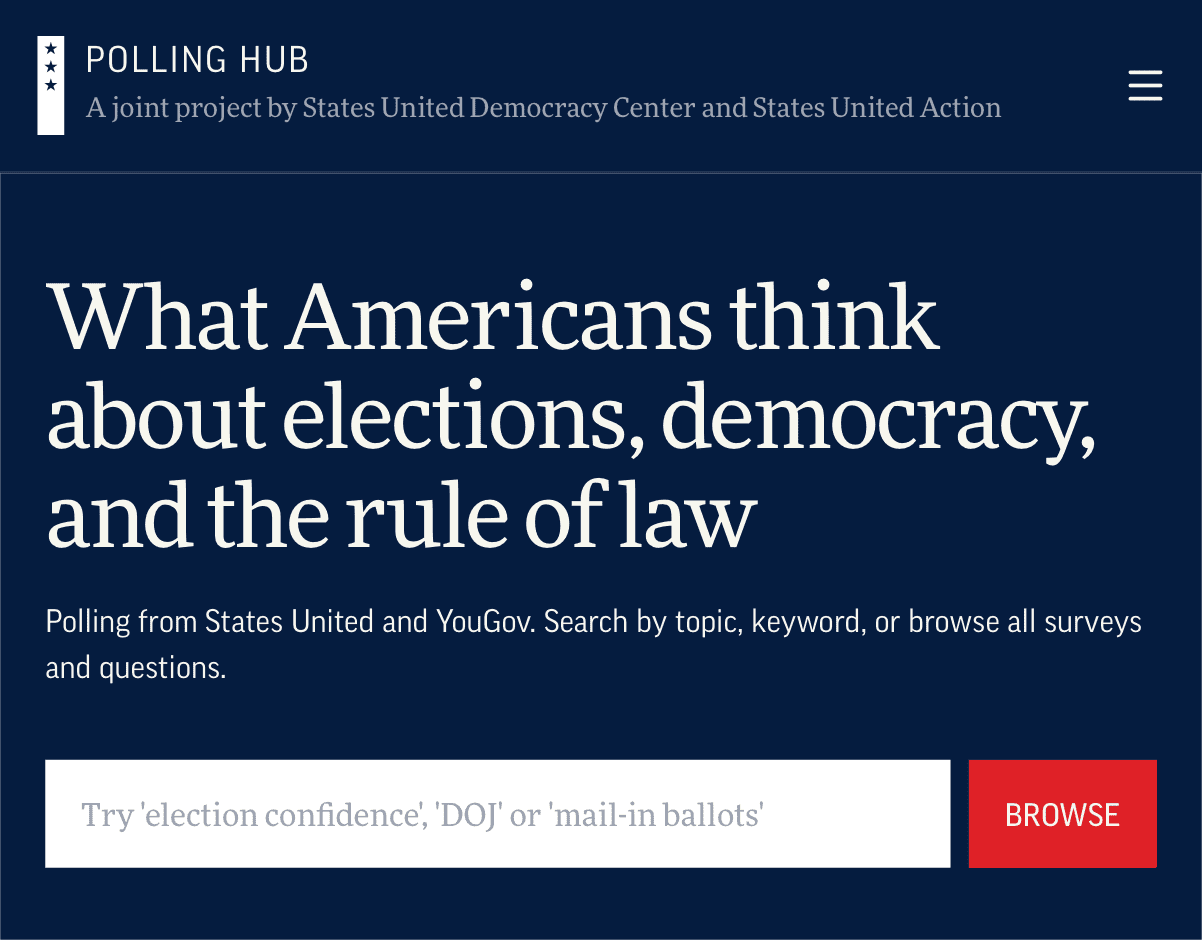
This week, States United launched our Polling Hub, a new resource that provides interactive access to all of our surveys—on elections, the rule of law, and more.
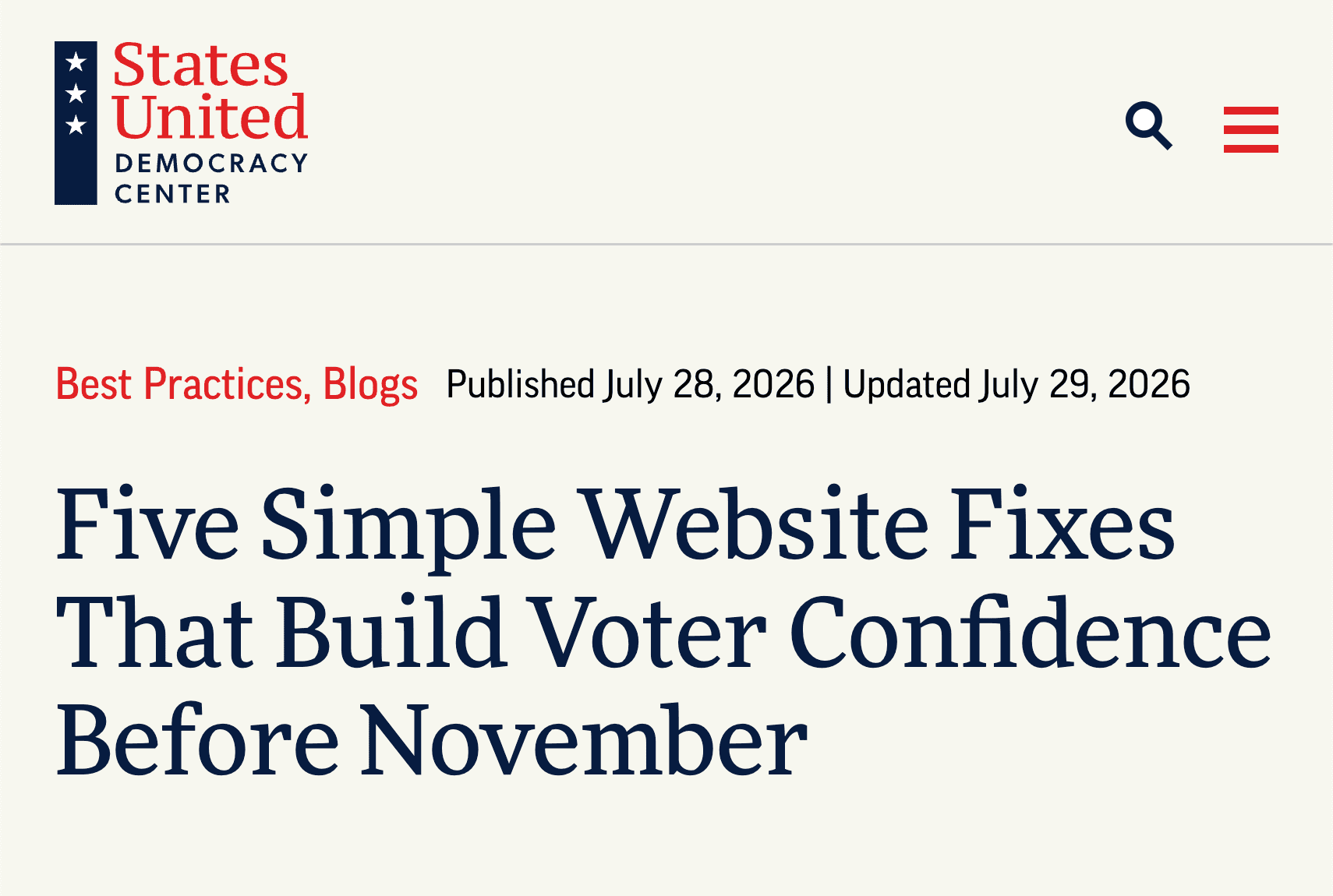
We also published a new blog, created in partnership with U.S. Digital Response, that provides tips for election officials on how to ensure their websites are as voter-friendly as possible ahead of November’s election.
States United research shows that millions more Americans may have voted in 2024 if their confidence in elections had been higher. “Confidence is built with one clear, trustworthy answer at a time,” our new resource reads, “and election officials’ websites are the most direct way to deliver it.”
State of the States
In New Jersey, a federal judge dismissed the Justice Department’s lawsuit seeking voters’ private data, the 18th case to be thrown out. The department brought 31 lawsuits in total seeking voter data; it has not yet won any of them.
➡️ MORE: Sharing the Facts About Federal Efforts to Compile State Voter Data
In Texas, the Secretary of State’s Office confirmed that some of the voters flagged by a federal program as “potential noncitizens” had, in fact, provided proof of citizenship to the state. The state’s election director ordered county election officials to reinstate the voter registrations of anyone who was incorrectly flagged.
The federal program—called Systematic Alien Verification for Entitlements (SAVE)—was originally designed to verify the citizenship status of people applying for benefits like food stamps and Medicaid, but the Trump administration overhauled it last year to check voters’ citizenship.
Late last month, a federal judge in Washington, D.C., ordered the Department of Homeland Security to halt use of the program, citing instances in Texas in which the program flagged eligible voters as potential noncitizens. In some cases, use of the program has resulted in Americans being deregistered to vote.
➡️ MORE: About the SAVE program