About Last Night
Plus: States push back on the DOJ’s threats. 🗳️
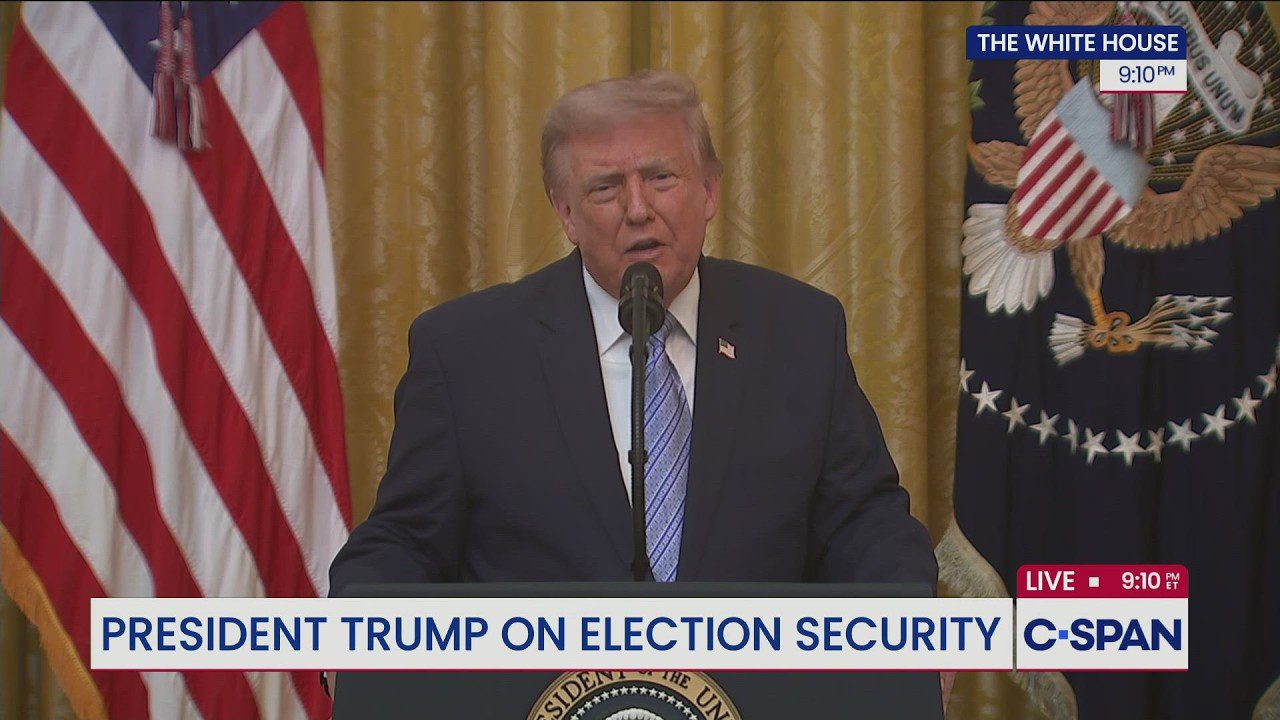
In a primetime address last night, President Trump recycled the same conspiracy theories and lies about elections that he’s been peddling for years.
Speaking from the East Room of the White House, he laid out newly declassified information seeking to cast doubt on the security of the 2020 election and attacked the safety of election infrastructure—including mail voting, voting machines, and the maintenance of voter rolls. But his claims do not reflect the safety and security of our elections and the realities of how elections are run.
“Tonight, the president offered nothing but cherry-picked grievances from selectively declassified material—not evidence, not facts, just noise,” said Joanna Lydgate, States United’s CEO. “It’s clearer than ever that he doesn’t understand how elections in this country actually work.”
Since returning to office, the president has attempted to wrest election powers from states through executive actions and pressure them to hand over voter data and change their election policies. But state officials have pushed back successfully in court; judges have affirmed that the U.S. Constitution designates election powers to the states.
“Americans trust the officials who run their elections,” Lydgate said. “They don’t want a president trying to insert himself into that process.”
She added, “No matter what lies Trump told tonight, or what absurd claims he makes in the weeks ahead, states will make sure this year’s midterm elections are free and fair.”
➡️ MORE: Here’s How We Know the 2020 Election Was Free, Fair, and Secure
This Week in Democracy
- In a primetime address to the nation, President Trump reiterated familiar lies about the 2020 election, voting machines, and voter registration systems. The administration selectively declassified intelligence documents that purport to back up his claims, but do not in fact provide any evidence of election irregularities.
“This isn’t new—it’s a deliberate campaign to undermine trust in our elections ahead of the midterms, so Trump can cast doubt on results he doesn’t like,” States United CEO Joanna Lydgate said in a statement. “The truth is simple: Our elections are free, fair, and secure, because of the hard work of state and local officials.”
➡️ MORE: Here’s How We Know the 2020 Election Was Free, Fair, and Secure
- The Department of Homeland Security ordered federal agents to pause the use of vehicle stops in most immigration enforcement operations, but quickly reversed the order after Trump intervened.
The agency ordered the pause on Monday after federal agents killed two men in Maine and Texas during attempted arrests. Federal officials have said that neither were the intended target of the operations. In Texas, the top local prosecutor said that federal investigators had not shared evidence with his office, and witnesses have cast doubt on the agency’s official accounts of what happened.
➡️ MORE: What’s Breaking Through About Federal Law Enforcement Tactics
- State officials responded to the Justice Department’s threats to bring criminal charges against election officials if they knowingly leave noncitizens on their state’s voter rolls.
Al Schmidt, Pennsylvania’s top election official, wrote in his reply that he takes his responsibility to ensure that only eligible voters can vote seriously. “That means working with the election officials of our 67 counties who are statutorily responsible for voter list maintenance,” he wrote. “Be assured that these dedicated local officials, as well as our employees who serve at the Department of State, work tirelessly to ensure that Pennsylvania’s voter rolls are accurately maintained.”
Idaho Attorney General Raúl Labrador also wrote that officials in his state have “taken significant steps to ensure that Idaho’s voter registration list only includes eligible U.S. citizens.” The Justice Department’s lawsuit seeking Idaho voters’ private data distracts from that work, he wrote.
Relatedly, federal judges dismissed the Justice Department’s lawsuits seeking voter data from New Mexico, New York, Virginia, and West Virginia. Fifteen of the department’s 31 lawsuits have now been decided; states have won each one.
➡️ MORE: Sharing the Facts About Federal Efforts to Compile State Voter Data
- A federal judge in Florida voided the settlement agreement between Trump and the IRS that created a $1.8 billion fund to pay the president’s allies and granted him and his family immunity from tax-related investigations.
The judge ruled that Trump’s lawsuit was an effort to “manipulate the judicial process,” since he has authority over the agency as president. She sent her decision to attorney discipline officials in D.C., Florida, and New York, so they could decide whether the president’s attorneys should face professional sanctions.
- The Trump administration unfroze $10 billion in federal funding for childcare and family support programs in five states. The administration announced that it would cut the funding in January, but the attorneys general of the affected states quickly sued to block it from doing so. Judges quickly and repeatedly ruled that the administration could not withhold the funding.
➡️ MORE: What’s Breaking Through About Politically Motivated Cuts to Social Services
State of the States
In Arizona, Maricopa County Recorder Justin Heap and the county’s Board of Supervisors settled a lawsuit over who controls the county’s election administration system.
“I’m grateful we have reached an agreement that concludes the litigation and will help ensure smooth, secure and lawful elections for Maricopa County voters,” said Kate Brophy McGee, the chair of the county board.
In Minnesota, state investigators received key evidence from the Justice Department related to the killings of two Americans and the shooting of another man by federal agents.
Minnesota Attorney General Keith Ellison and Hennepin County Attorney Mary Moriarty sued the Trump administration for access to the evidence in March, after federal investigators refused to work with local officials to investigate the shootings.
“As I’ve said many times over the last six months, our office has not prejudged any of these incidents,” Moriarty said in a statement. “We need transparency. We need cooperation. Our community needs it. … Our democracy requires it.”
In Washington state, Trump fired the top federal prosecutor for the Seattle area less than an hour after a panel of federal judges appointed him, leaving the administration’s preferred prosecutor in charge.
The Trump administration has attempted to use similar strategies to keep its preferred prosecutors leading U.S. attorney’s offices across the country. But federal judges have repeatedly disqualified those prosecutors, ruling that the administration’s strategy violates federal law and the Constitution.
The Society for the Rule of Law, represented by States United, filed briefs in two cases, urging judges to uphold rulings that disqualified prosecutors in New York and Virginia.
The briefs point out that federal law and the Constitution define the steps the White House must take to appoint federal prosecutors. That process gives some authority to Congress and judges to check the executive branch’s power. But the Trump administration’s strategy violates that process, the briefs argue, and “threaten the legitimacy of prosecutions, the credibility of U.S. Attorney’s offices, and the fair and impartial administration of justice.”