Checks & Balances: How States Defended the Rule of Law in 2026
Five times states defended their constitutional authority and protected their communities
In This Resource
-
Can the president withhold money Congress already approved?
-
Can the president deploy National Guard troops without a governor’s consent?
-
Can the president bypass the rules for appointing federal prosecutors?
-
Can the Justice Department be used to target political opponents?
-
Can Executive Orders override the Constitution?
-
The Work Ahead
Checks and balances are foundational to American democracy. When the federal government pushes the limits of its authority, states are at the front line protecting the rule of law.
Over the past year, the Trump administration has repeatedly disregarded constraints of executive power: It withheld funding approved by Congress, deployed National Guard troops into communities without their governors’ consent, and challenged longstanding safeguards in the federal criminal justice system. But state leaders pushed back in court, defended their constitutional authority, and worked to protect the people they serve.
These aren’t just legal battles playing out in Washington. They affect the services Americans depend on, the safety of their communities, and their fundamental rights.
Here are five ways checks and balances have been put to work in 2026.
No. Once that funding is signed into law, the president can’t simply withhold money because he disagrees with how it’s spent.
One of the most important ways our Constitution checks federal power is by dividing it, giving Congress the power to control spending by executive branch agencies. But the Trump administration has repeatedly frozen, canceled, or imposed new conditions on funding Congress authorized for health care, education, disaster relief, and other essential services.
State attorneys general have challenged these actions in court. In November, a coalition of 23 states won a ruling blocking the administration from tying certain public safety grants to immigration enforcement demands. It was one of many state wins in court, clawing back essential federal funding.
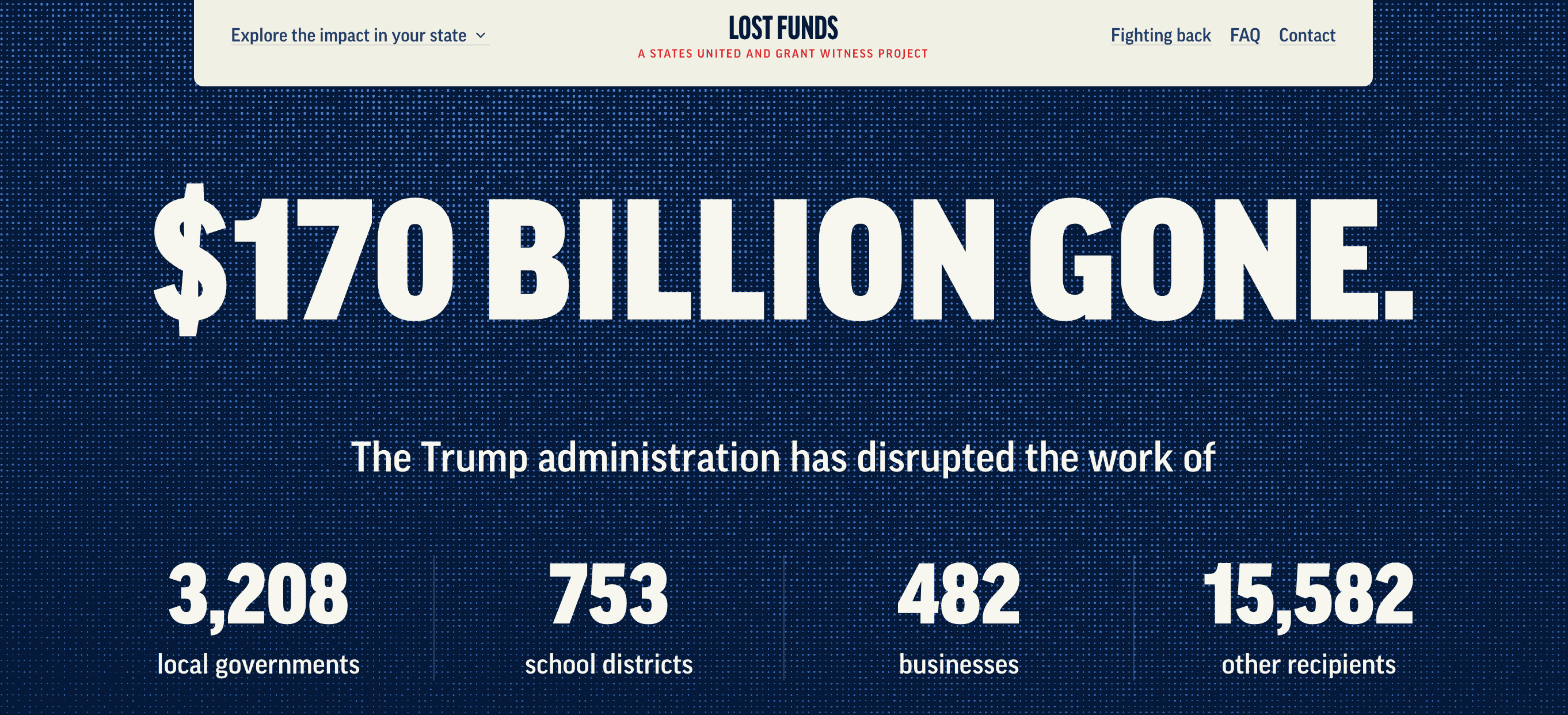
The scale of these disruptions is striking. States United’s Lost Funds tracker identified $170 billion in disrupted grants nationwide this month. But 27 states have joined lawsuits to restore some of the billions disrupted.
Why it matters: Federal funding supports everything from health care to public safety. States challenged unlawful funding restrictions and helped protect services their residents depend on.
Sometimes. But the president must have the legal authority.
Governors command their states’ National Guard. Federal law limits when the president can take control.
The Trump administration sought to deploy troops into several communities, despite objection from state leaders. States fought back in court, arguing that the deployments exceeded federal authority and interfered with their responsibility for public safety.
In October 2026, a federal appeals court upheld a ruling blocking the administration’s deployment of California National Guard troops in Los Angeles and ordered control returned to Gov. Gavin Newsom. The U.S. Supreme Court has also been skeptical, ruling in December 2025 that the Trump administration failed to justify that the conditions in Illinois warranted the president taking control of the Illinois National Guard.
States United supported former military leaders raising similar concerns in a legal brief, warning about the consequences of using troops for domestic law enforcement.
Why it matters: Local officials know their communities best. Limits on military deployments protect state authority, civilian law enforcement, and constitutional rights.
No. The law sets limits on who can lead federal prosecutors’ offices.
U.S. attorneys wield enormous power. They oversee criminal prosecutions and decide which federal cases to pursue.
But the administration has tried to keep its politically preferred prosecutors in office without Senate confirmation. It used temporary appointments and alternative job titles to avoid giving Congress its constitutionally required say.
Federal courts pushed back. In August, an appeals court ruled that the administration’s chosen prosecutor in Nevada had been unlawfully appointed. The Nevada decision was part of a broader pattern, as federal courts rejected similar appointment workarounds in other states.
States United has challenged similar appointment maneuvers through legal briefs on behalf of the Society for the Rule of Law.
Why it matters: Congress and the courts have a role in checking the president’s appointment power. Those safeguards help protect the independence and integrity of federal prosecutions.
No. Federal prosecutions must be grounded in evidence and the law, not political retaliation.
The Justice Department was created to serve the American people and enforce the law, not the president’s personal interests.
After President Trump publicly called for New York Attorney General Letitia James to be prosecuted, federal prosecutors brought mortgage-related charges against her in 2025.
A judge dismissed the charges because the prosecutor was unlawfully appointed. But the administration appealed, and a federal appeals court heard arguments in September 2026.
States United represented democracy scholars and experts in a brief warning about the dangers of using federal criminal enforcement powers to target perceived political adversaries. States United has also filed similar briefs in cases involving the political targeting against U.S. Sen. Mark Kelly and former FBI Director James Comey.
Why it matters: No American should face prosecution for criticizing the government or disagreeing with those in power. Independent courts help safeguard against abuses of prosecutorial authority.
No. The president cannot change the Constitution or exceed powers granted by Congress by signing executive orders.
Two major Supreme Court rulings in 2026 showed how the Constitution and federal law limit presidential authority.
Birthright citizenship: The administration tried to deny citizenship to certain children born in the United States. A coalition of state attorneys general, as well as private plaintiffs, challenged the order, arguing that it violated the 14th Amendment. In June, the Supreme Court agreed, reaffirming constitutional protections for birthright citizenship in a separate case brought by private plaintiffs.
But the fight isn’t over. In August, the administration issued another executive order seeking to restrict birthright citizenship for additional categories of children, which prompted another legal challenge in September.
Tariffs: The administration also used emergency powers to impose sweeping tariffs. A coalition of states and small businesses challenged the policy. In February, the Supreme Court ruled that the emergency-powers law did not authorize those tariffs.
Different issues, the same fundamental principle: The president cannot exercise powers the law does not give him.
Why it matters: Constitutional limits on executive authority protect people’s rights and ensure that decisions affecting families, businesses, and consumers follow the law.
Checks and balances don’t work on their own. They depend on public officials exercising their authority, courts enforcing legal limits, and leaders respecting decisions they may disagree with.
Throughout 2026, states showed what that responsibility looks like in practice. They challenged federal overreach in court and defended their constitutional authority, protecting the people they serve.
The work doesn’t end with a court victory. As new challenges emerge, states will continue to play a central role in upholding the Constitution and demanding accountability. They also have an opportunity to strengthen the institutions Americans rely on.
The next chapter of the rule of law won’t be written in Washington alone. States will help shape it.