Return to Sender
Plus: The DOJ loses more cases seeking voters’ information. 🗳️
This Week in Democracy
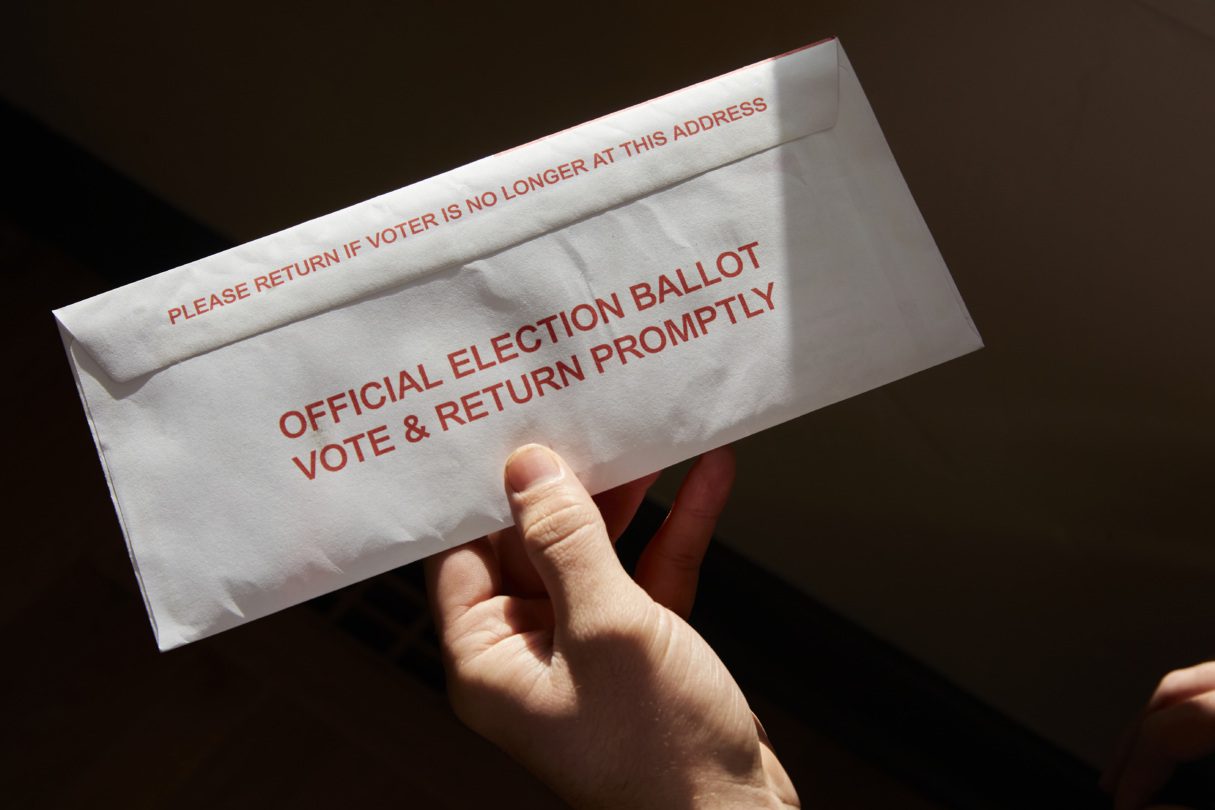
- A federal judge denied a legal effort to halt President Trump’s executive order targeting mail voting. The judge ruled that because the U.S. Postal Service has yet to implement the changes to mail voting that Trump ordered, it was too early to block it from going into effect. The judge left open the possibility that courts could rule against the order later.
Officials from 23 states and the District of Columbia separately sued the Trump administration last month seeking to block the president’s order. The state officials argue that the order is illegal because the Constitution gives states—not the president—the power to run elections. That case continues to move through the courts.
➡️ READ: Sharing the Facts About Trump’s Second Executive Order on Elections
- Federal judges dismissed the Trump administration’s lawsuits against Maine and Wisconsin that sought to force state officials to turn over voters’ private information. Eight of the administration’s lawsuits seeking voter data from states have been decided, and the Department of Justice (DOJ) has lost each one. There are more than 20 others still pending.
“I will continue to defend every Mainer’s voting rights and their privacy,” Maine Secretary of State Shenna Bellows said in a statement. “Let me be clear—Trump and the DOJ may continue to try to interfere with free and fair elections run by the states. We will not let them.”
Lawyers for New Hampshire Secretary of State David Scanlan were also in court this week, arguing that the Justice Department’s lawsuit seeking voter information from their office should be dismissed, too.
➡️ READ: Sharing the Facts About Federal Efforts to Compile State Voter Data
- The Justice Department sued Maine, Massachusetts, Oregon, and Washington state over the states’ refusals to provide undercover license plates to federal agents. State officials defended their decisions, saying that they would not support federal agents’ unlawful conduct by issuing the plates.
“Judges across the country have found that the Department of Homeland Security’s tactics in conducting civil immigration enforcement routinely violate the Constitution,” Washington Gov. Bob Ferguson told The Associated Press. “That is unacceptable. Our state will not facilitate that misconduct.”
➡️ READ: Survey: Americans Disapprove of Federal Agents’ Enforcement Tactics
- More than 30 former military leaders and Vet Voice Foundation, represented by States United and Protect Democracy, filed another friend-of-the-court brief urging an appeals court to order the Trump administration to end the deployment of National Guard troops in Washington, D.C.
News broke earlier this month that the Defense Department is preparing to extend the D.C. deployment until the end of Trump’s term in 2029. The veterans’ brief, filed in the case brought by D.C. Attorney General Brian Schwalb, makes the point that politicized deployments like the one in the nation’s capital risk damaging the nonpartisan reputation of the military and harm the morale of troops.
➡️ MORE: About the brief
- A federal judge ordered the Justice Department to halt work related to the $1.8 billion fund to pay Trump’s allies who claim they were unfairly targeted under previous administrations. Earlier this week, a bipartisan group of more than 30 former federal judges also asked a court to investigate the president’s settlement agreement with the Internal Revenue Service that created the fund, writing that the deal was a “corruption of the judicial process.”
State of the States
In Alabama, state officials appealed to the U.S. Supreme Court, asking the justices to put on hold a lower court’s order that barred them from enacting a congressional district map that the court previously ruled was unconstitutional.
A judge struck down the map in 2023, ruling that the districts violated the Voting Rights Act because they only included one majority-Black congressional district out of the state’s seven—despite the fact that Black residents make up roughly one-quarter of the state’s population.
The state recently attempted to put those districts into effect following the Supreme Court’s decision last month in Louisiana v. Callais, in which the justices ruled that Louisiana’s creation of a second majority-Black congressional district was unconstitutional.
But earlier this week, the same group who brought the 2023 case asked the lower court to once again block implementation of the map, arguing that it remained unconstitutional even after the Callais decision. The judges quickly agreed and issued a new order halting use of the map in 2026, which Alabama Attorney General Steve Marshall and Secretary of State Wes Allen are now appealing to the Supreme Court.
States United represented three former Republican governors—former California Gov. Arnold Schwarzenegger, former Massachusetts Gov. William F. Weld, and former New Jersey Gov. Christine Todd Whitman—in filing a Supreme Court brief in the case in 2022.
➡️ MORE: About the brief
In California, Gov. Gavin Newsom signed legislation outlawing anyone from taking ballots or other voting equipment without authorization from election officials.
The bill was spurred by a county sheriff’s seizure of hundreds of thousands of ballots in March that were cast in 2025. The sheriff seized the ballots after a group of citizens claimed it had conducted an “audit” and found discrepancies. Attorney General Rob Bonta sued the sheriff, and the California Supreme Court ordered him to stop his investigation and preserve the ballots.
“I commend Governor Newsom and the Legislature for taking action that strengthens public confidence in our democratic process,” California Attorney General Rob Bonta said in a statement about the new law. “Voting is the fundamental right from which all other rights flow, and today we are making clear that election interference or intimidation has no place in our state.”
In Minnesota, Hennepin County Attorney Mary Moriarty announced the arrest of a U.S. Immigration and Customs Enforcement agent. Moriarty’s office brought criminal charges against the agent earlier this month for shooting a man during the surge of federal immigration operations in and around Minneapolis earlier this year and then lying under oath about it.
The announcement from Moriarty’s office said state investigators traveled to Texas and worked with agents from the U.S. Department of Homeland Security Office of the Inspector General and the Texas Rangers to arrest the agent.
“In Minnesota, we believe in equal justice under the law,” Minnesota Attorney General Keith Ellison said in a statement. “That means nobody is above the law, including agents of the federal government.”
➡️ READ: What’s Breaking Through About Federal Law Enforcement Tactics
In Texas, state officials began checking whether voters flagged by a U.S. Department of Homeland Security program as “potential noncitizens” have, in fact, already provided proof of their citizenship to the state.
The program, known as Systematic Alien Verification for Entitlements (SAVE), was originally designed to verify the citizenship status of people applying for benefits like food stamps and Medicaid. The Trump administration repurposed SAVE to verify voters’ citizenship, but it has proven to be unreliable.
Texas Secretary of State Jane Nelson’s office sent lists of voters flagged by SAVE to county election officials late last year. The county officials then began investigating and found that hundreds of voters identified by the program had already provided proof of their citizenship to the county or the state’s Department of Public Safety.
➡️ READ: More about the SAVE program